Sunday, 31 March 2013

Short Story Sunday - William Trevor

Cheating at Canasta - William Trevor
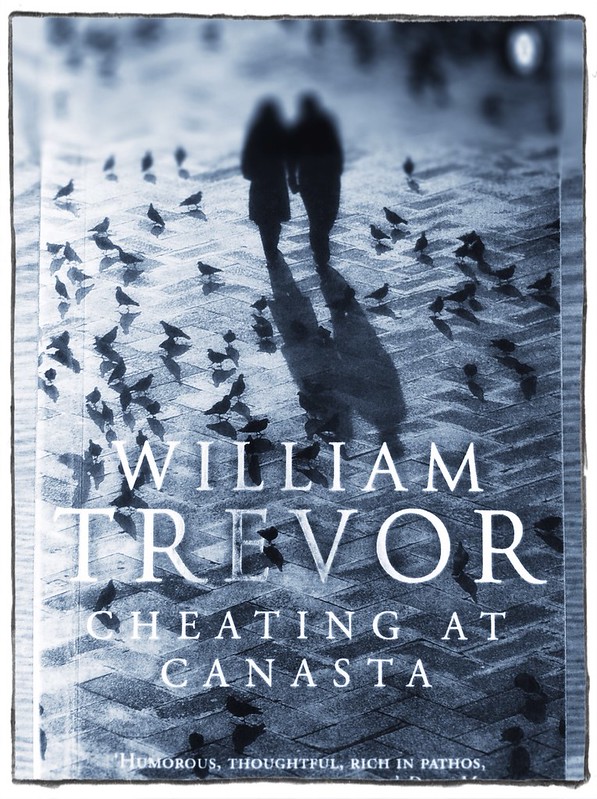

After reading such praise as:
"There is no better short story writer in the English-speaking world" 
Wall Street Journal
And hearing William Trevor described as the "master" of the short story, I was really looking forward to reading Cheating at Canasta

I did not like this collection, at all. Each tale is as depressing as the last, in, what seemed to me, a celebration of melancholia. The twelve stories feature:

  • A young mechanic in rural Ireland whose life is changed forever after a car accident.
  • A wife who, for the last nine years, has tried to ignore her internal screams of anguish and avoid communicating with her husband after he was investigated by the police in connection with the murder of a high-class prostitute.
  • A vagabond returning to Ireland after many years in England, to threaten and blackmail the priest in the town where he grew up.
  • A man reminiscing about his wife and the blissful early days of their marriage. At her behest, he travels to Italy and dines in their favourite restaurant, but he dines alone as his wife and their shared life together have been claimed by dementia.
  • A young teenager who feels guilty after her boyfriend beats another boy to death. She knows that he was, in part, showing off to her and she knows that, if only for a moment, she enjoyed the fact that her boyfriend wanted her to notice him even though his posturing display involved extreme violence.
  • A plain, teenage girl stuck in a dull life who is courted by an older, sexual deviant. Their burgeoning relationship is halted before he can abuse her. But, she laments the end of their 'friendship' in her dull, empty life devoid of love.
  • An elderly widow who mourns the loss of her husband and the end of an era, when her sons are forced to sell off parts of their estate in order to survive financially.
  • A shy, soft-spoken teacher who is left by his younger lover despite the quiet harmony of their relationship and the lack of arguments and disputes.
  • A farmer who falls in love again after the death of his wife from cancer. He hopes to marry his neighbour Teresa, but their union is disrupted by the needs and desires of their children.
  • An elderly lady who bristles at the letters which her husband continues to receive from a woman he had an affair with decades ago.
  • The relationship between Hester and Bartholomew, two unmarried, middle-aged siblings from Dublin who find themselves seeking new housing arrangements after spending their whole childhood and half their adult lives together in the same home.
  • The chance meeting of two men in Paris who had been childhood friends in Ireland. The story details the loss of innocence and the crime of adults who forget things which should not be forgotten.
If I found the collection so depressing, why did I continue reading? The critics are right, William Trevor really is a master of the genre. His characterisation, particularly of his mature women characters, is excellent. The stories are also well paced and do not drag. Although, some of the stories in Cheating at Canasta were only several pages long, all of the stories felt fully developed. In just several pages William Trevor is capable of drawing the whole story and focuses on the heart of the matter so intensely that you wonder why you would even need the extra pages that the longer form demands.

You can read the eleventh story from the collection, Faith, for free online at The New Yorker


Tuesday, 26 March 2013

Denton Burn Library

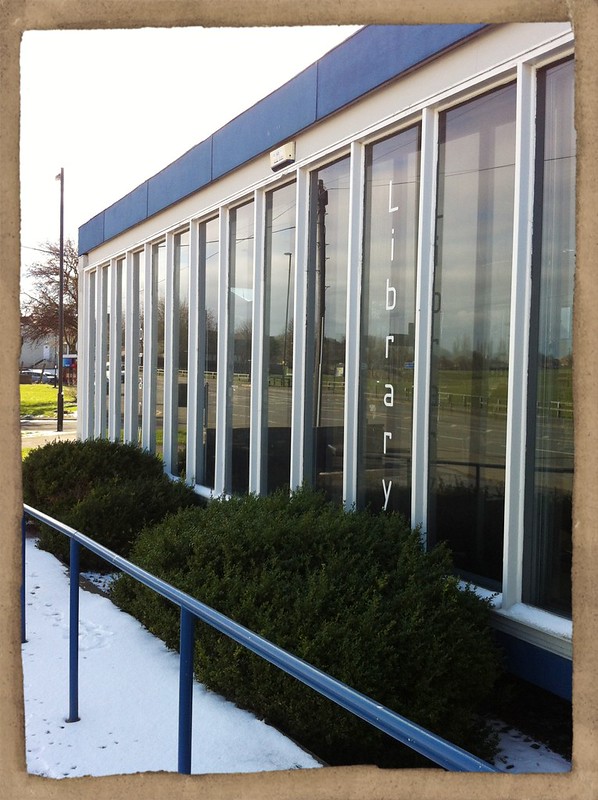
Denton Burn Library opened in 1961 and was refurbished in 1986. It was a beautiful sunny day when I visited which probably helped to colour my positive impression of the building and its services. 


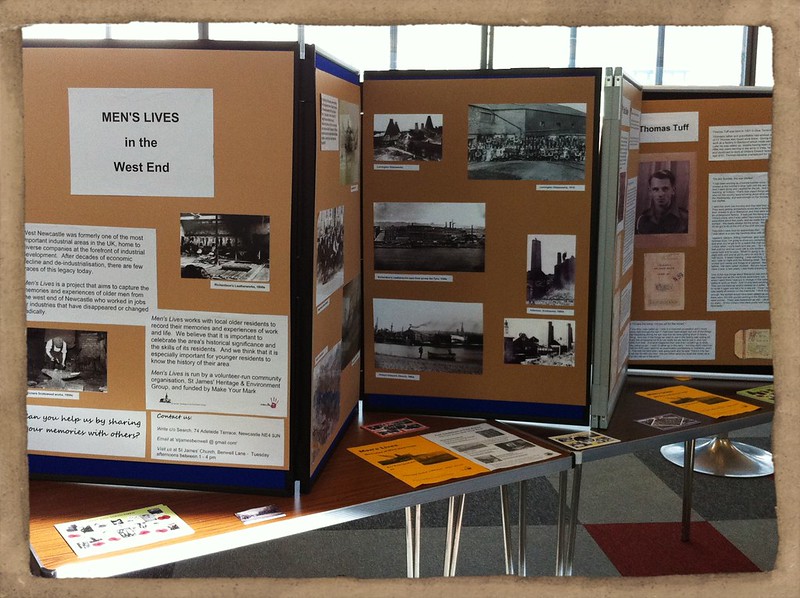
Like all the branch libraries I have visited, it was well-used by locals: reading newspapers, checking books in and out, reading to children in the children's library and, of course, using the PCs. Also, there was an interesting local history display about men's working lives in the West End of Newcastle (featuring lots of information about the Elswick Works, home of Armstrong Whitworth)


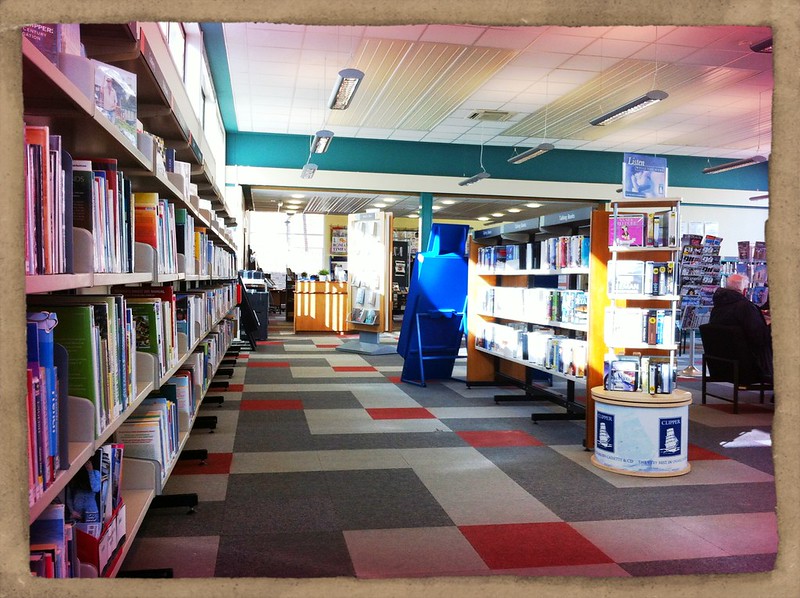
The adult section of the library is a large open plan space with comfortable seating situated in the middle of the room. It is well-lit both artificially and by natural light.


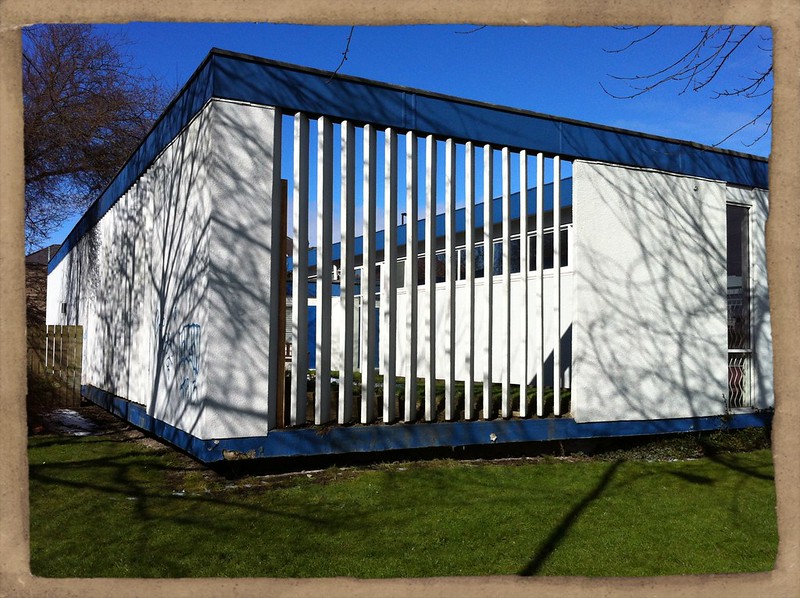
I was really impressed by the design of this sixties building. The interior had a warm, bright and airy feel to it and, the exterior with its white walls and jaunty blue fascia really shone in the sun. I don't know if the public are allowed access in the summer months, but at the back of the library there is an enclosed garden.

The back of the library with an enclosed garden

Denton Burn Library may be closed by Newcastle Council in 2013.

Sunday, 24 March 2013

Short Story Sunday - Jane Gardam

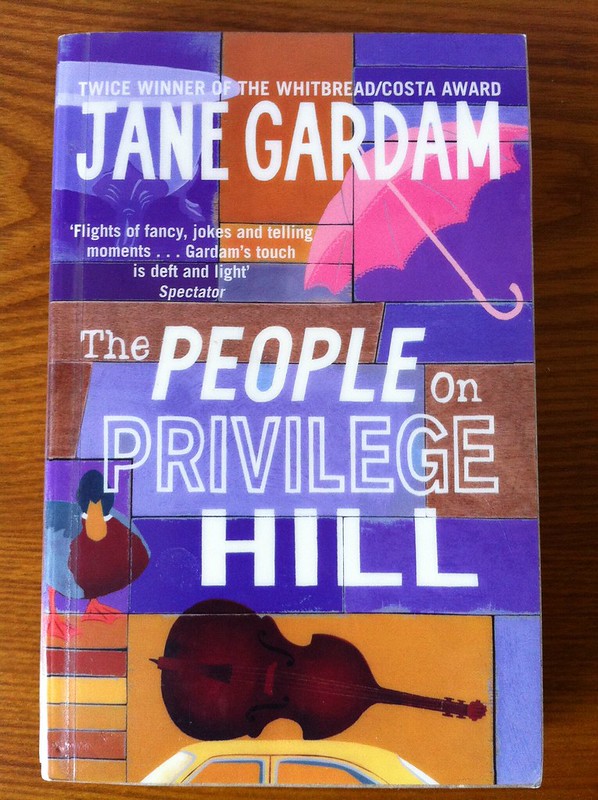
The People on Privilege Hill - Jane Gardam


 Jane Gardam's collection contains fourteen stories that deal with memory (a mother remembering her daughter's wedding in The Hair of the Dog and former class mates reminiscing about their time at university in The Last Reunion), relationships (a lonely old lady and her love for a gorilla at the local zoo in Pangbourne and the end of a marriage in Snap) and sons leaving home to go out into the wide world (Lester on his last night at home before his first term at university in The Fledgling and Jim Smith attending an interview for medical school in The Flight Path).

My favourite stories were The Fledgling and The Flight Path. The two stories are similar in that they both deal with young men on their first trips away from home, The Fledgling is set in modern times and The Flight Path follows Jim Smith from the North East of England as he journeys to London for the first time in his life in order to attend an interview for medical school. It is winter 1941 - the Blitz. Jim's mother has arranged for him to spend the night of the interview with Nell, a cousin of hers, who lives in Wimbledon with her husband, a former dentist. Jim successfully navigates the Tube to find a train heading towards Wimbledon. I loved the description of the crowded carriage of the Tube,
"Fore and aft he was pressed into a host of silent people pointedly looking away from each other and clinging to leather nooses that hung down from the roof." 
Jim's intended destination is on the flight path of the bombing raids, but when he arrives he finds tranquil, suburban streets lined with large Victorian houses. His Aunt Nell and her husband Bob live with Cissie (Nell's aged aunt) and two long-term lodgers. There is also Mac in the kitchen, who seems to be their cook or, perhaps, another lodger who pays for her board by cooking the meals. Jim is absolutely famished, when at last,
The door behind the denstist all at once banged open and a cloud of warmth flooded in with a glorious smell of cooking and a goddess filled the doorway. She bore a big blue oval cooking pot. She was tall and blonde. A figure of gold."
She may be beautiful, but to an eighteen year old boy, she was old, "She might even have been thirty.". That made me laugh, as I did many times throughout the collection. Although the themes developed are not amusing: mutating relationships, loss, nostalgia, the vagaries of old age, Jane Gardam's characterisation is deft and frequently comic.

As soon as the household Jim is visiting finishes dinner the air raid sirens start. I won't tell you how it finishes.


Friday, 22 March 2013

Blakelaw Library


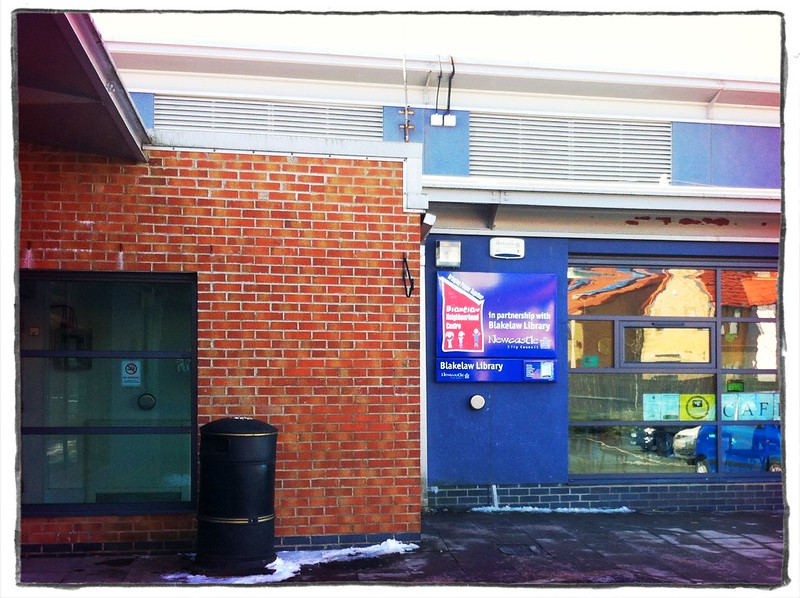
Since 2004 Blakelaw Library has been housed in a shared usage building. Blakelaw Neighbourhood centre on Binswood Avenue hosts: slimming groups, a senior cinema club, the history society, many other local groups and initiatives and the local branch library.

There is ample free parking at the centre and the building is warm and modern. There is a reception desk as you enter, where, unfortunately, I was greeted with a grimace and my cheery "hello" was met by silence, and the entrance to the library is just around the corner.


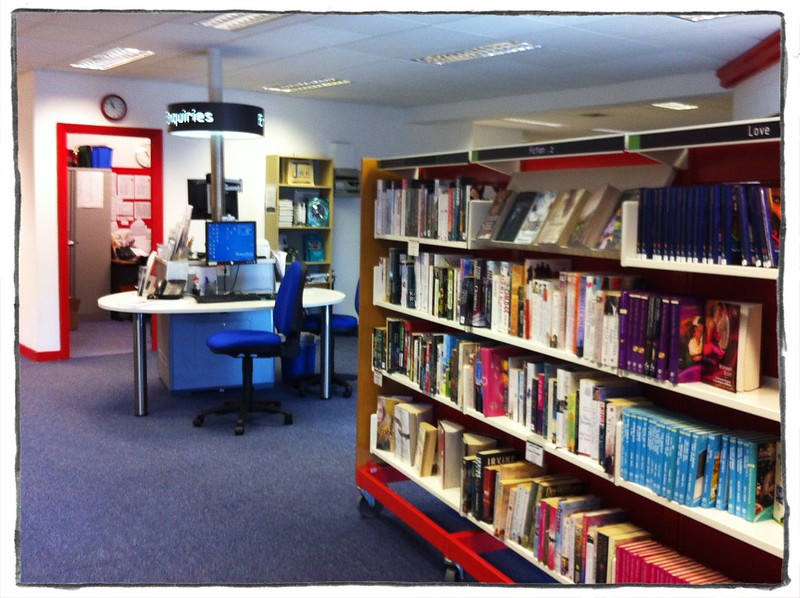
When I visited, the library was very busy as the weekly 'coffee and conversation' event was underway. There were other people coming and going to borrow and return items and the few computers that are available were all occupied.

Blakelaw Library is a vibrant meeting place and an important resource for the local community. Newcastle Council plan to close Blakelaw in 2013.

Wednesday, 20 March 2013

A Single Swallow - Horatio Clare


I haven't read any nature writing for several months, so a couple of weeks ago I headed to the 590s section of the library to see what I could find.

I stumbled across A Single Swallow and was immediately attracted by it's colourful, orange, green and blue dust jacket and the vague feeling that I would like to read something about birds. I had a quick flick through and could see that it was a travel book, but seeing as the hook for Horatio Clare's journey was to follow swallows from their winter migration grounds in South Africa back to Wales, I thought that the book would focus extensively on swallows - migration patterns, physiology, mating behaviour, etc. Obviously, the cataloguer was having a bit of an off-day, as A Single Swallow is clearly travel writing (it even says 'travel writing' on the back, next to the bar code). Having said that, the author displays his interest in the natural world with really beautiful and perceptive descriptions of: sky, land, river, trees and animals.

The first chapter, which describes the starting point of his journey in South Africa, focuses quite heavily on the birds, so it wasn't until I had read a bit further that I realised that this wasn't the sort of book I was hoping to read. I continued on for two reasons: a) travel writing is one of my favourite genres, so I thought I would probably enjoy it anyway, and, b) the language was wonderfully lyrical and so vivid that I kept stopping to read sentences out loud.

One of the figures of speech which kept jumping out at me was the author's liberal use of alliteration - "The light is peculiar, melted pewter and there is a penumbra around the sun." My favourite snippet described travelling along a river and keeping close to the bank, "we stuck to the steep-shelving shore, no more than a foot into the flow". His description doesn't feel forced to me, at all, and out of all the other ways he could have described this simple action, this repetition of st-, st-, sh-, sh-, f- f- made me declaim this sentence out loud about four times. The necessity to stop, at intervals, and sing snippets of the text, meant that this book took me much longer than average to finish. 

I also found the author's use of simile and metaphor refreshingly inventive. For example, in describing the dangers of choosing a window seat next to the metal frame of an overfilled bus, he says, "I will collect a fat bar code of bruises down my right side."

The first two thirds of the book that dealt with sub-Saharan Africa were enjoyable, but after Algiers the book started to go down hill for me, reaching the depths when the author suffers an episode of melancholy in Gibraltar and chucks his rucksack (containing all his supplies, notebooks and souvenirs) into the sea from the top of a cliff. He then proceeds to discard his wallet and passport en route to Madrid. This last section of the book was mainly about 'the journey' rather than travel. On return to England and in trying to make sense of his journey and readjustment to British life, he says,
"And because I am a romantic, and because perhaps I really had been knocked sideways by the journey, I imagined that what had happened to me would be met with universal rejoicing by my family. It was not."
I found it easier to understand his journey as a whole, both pre- and post his manic episode/period of enlightenment, by changing the lower case r of "romantic" to Romantic.

Was this book the best travel memoir I have ever read? No. But, Horatio Clare's writing is enjoyable enough  for me to consider picking up another one of his books in the future.

Sunday, 17 March 2013

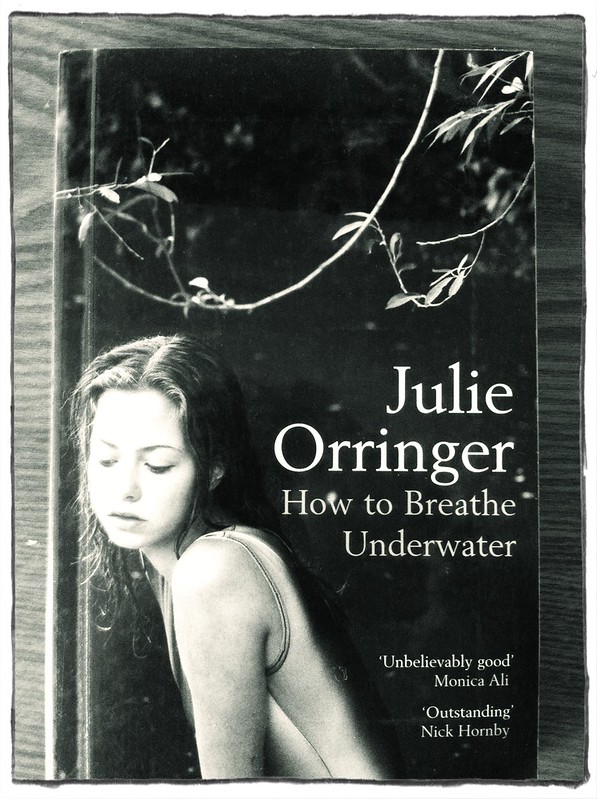
Short Story Sunday - Julie Orringer

How To Breathe Underwater - Julie Orringer


I had intended to ration the reading of this collection throughout the week. Once I started to read though, I polished it off in a couple of days, which is a testament to Orringer's skill as a storyteller, and her ability to authentically portray the thoughts of young women, as I didn't enjoy most of the stories.

Orringer's debut collection consists of nine tales which focus on girls and young women (from ages 9 to 20) as they deal with the 'complicated' parts of life: how to handle a mother's terminal cancer, bullying at school, jealousy, religious identity, sexual awakening and betrayal, grief, guilt and drug addiction.

I found the themes and plots of most of the stories either too bleak or too salacious. At times, some of the stories seemed unnecessarily sensational and I think the collection as a whole would have worked better with more low-key stories.

However, I did like the second story in the collection, When She Is Old and I am Famous. This story centres around the animosity and jealousy that Mira, the twenty year old, overweight narrator,  feels for her fifteen year old cousin, Aida, who is a successful model - "Ai-ee-duh: two cries of pain and one of stupidity".

Mira is studying art in Italy and, despite their mutual dislike, her cousin, who lives in Paris, comes to stay for a holiday, interrupting Mira's friendship with her classmates Joseph and Drew, who drool over Mira's beautiful cousin and ignore her.

The story deals with themes of female rivalry, career ambition, insecurity and unconventional family life. The dialogue is witty and sharp, and the less sensational story line lent this tale a subtlety and sophistication that I thought was missing in some of the more dramatic stories. 

Friday, 15 March 2013

The Library File Goes to the West Midlands

Part Three - Chester House Library


The library seen from the high street.
A trip to Chester House Library in the village of Knowle, just outside Solihull, was the highlight of my trip to the West Midlands.

As you can see from the picture above, when seen from the high street there is little indication that this wonderful building is actually the local public library. The entrance to the library is at the side of the building by the south wing. It would not be feasible to have the entrance on the high street as the pavement is rather narrow.

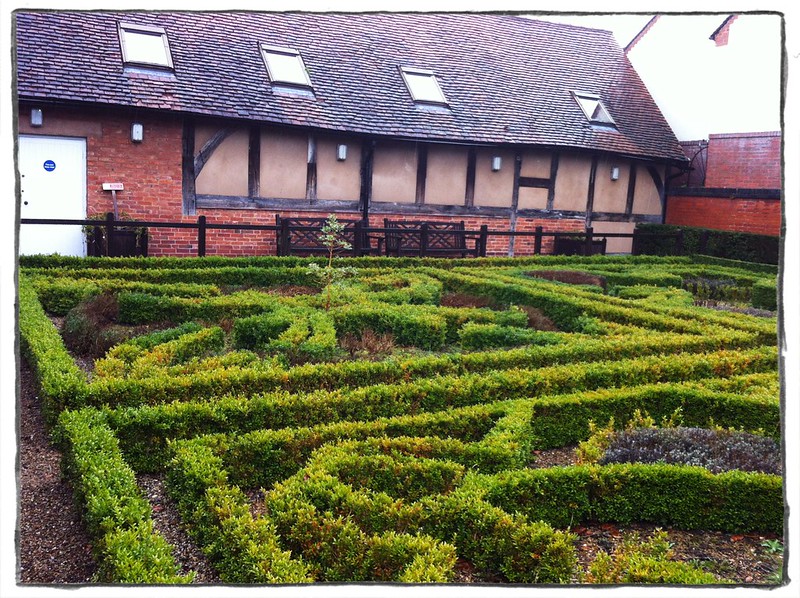
I entered the library from the other side as there is a free car park on a parallel road to the high street with a connecting alley which goes right by the library entrance. Accessing the library from behind also gives you the opportunity to visit the recreated, Elizabethan knot garden (commissioned by the council and opened in 1989).

Chester House consists of five different buildings of different dates, styles and construction: the south wing was built  in 1400 or earlier, the north wing dates from 1500 - 1550 and, finally, around 1600 a two-storey  block was built linking the two original buildings to form a substantial house.

Not much is known about the original inhabitants of these early buildings, due to a lack of records, but from 1810  to 1910 the house was owned by the Kimbell family, from 1910 to 1925 it was occupied by H. Blundell (a farmer), in 1925 Mr Pickering took possession of the house and it was from his descendants that the council bought the house. Solihull Council started restoration on the house in 1972, although at that time there were no plans to make the building a library. Thanks to the creative-thinking of some of the council's senior officers, it was eventually decided to use Chester House as a library. Until 1975 - when Chester House officially opened as a library - the library facilities had been housed in a shop in the high street.
Plan of the ground floor and garden.
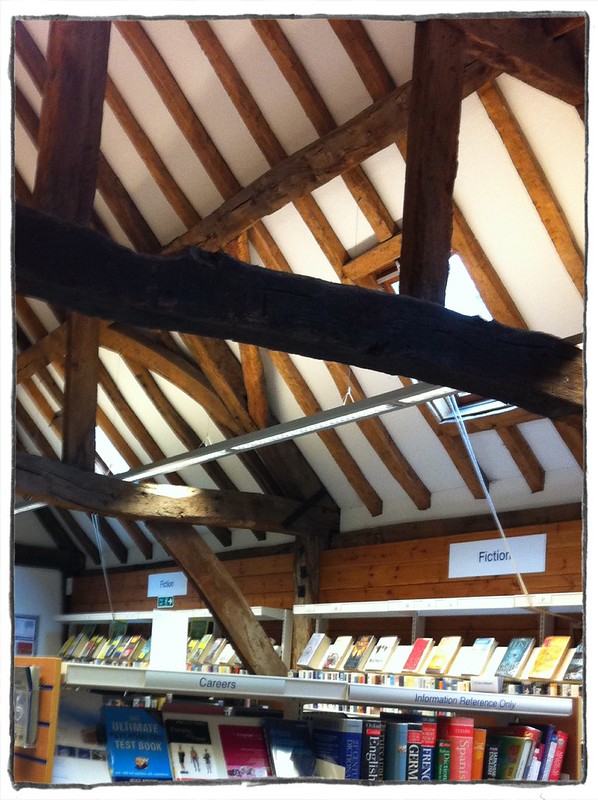
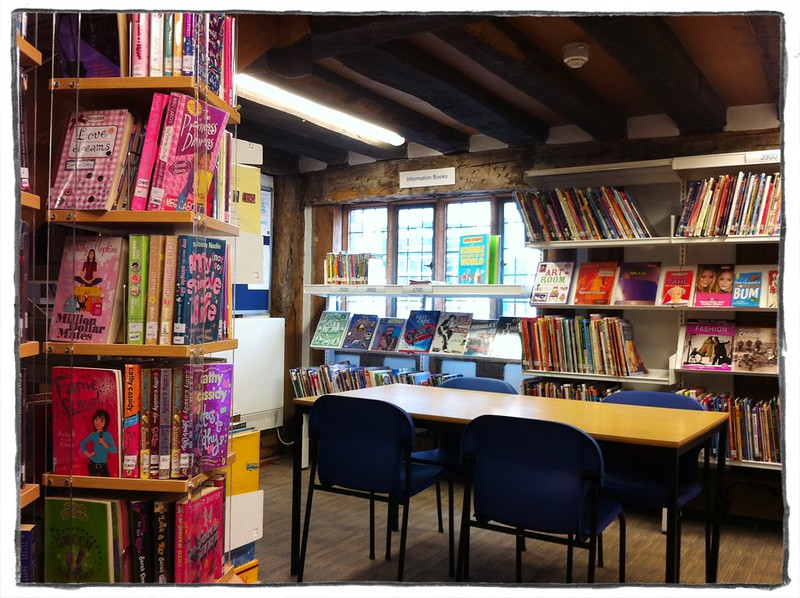
Even though Chester House is not a purpose built library, the space is used well to make a library which is aesthetically pleasing and easy to use. The library is well-lit thanks to the velux windows which were added to the east wing roof. And, it is nicely partitioned with one area for adult fiction, non-fiction and reference material, a separate, cosy room for the children's library which leads through into a separate teen section.
The roof of the east wing with velux windows and lovely wooden beams.
The teen section.
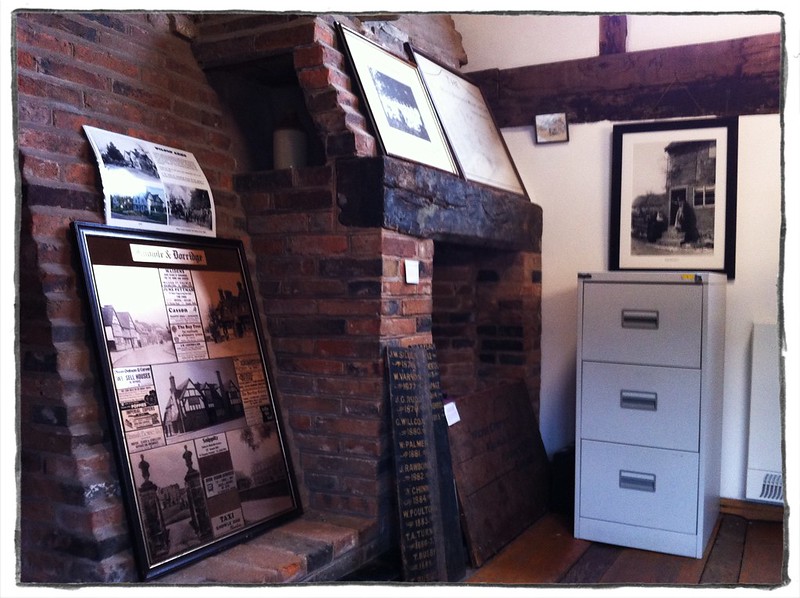
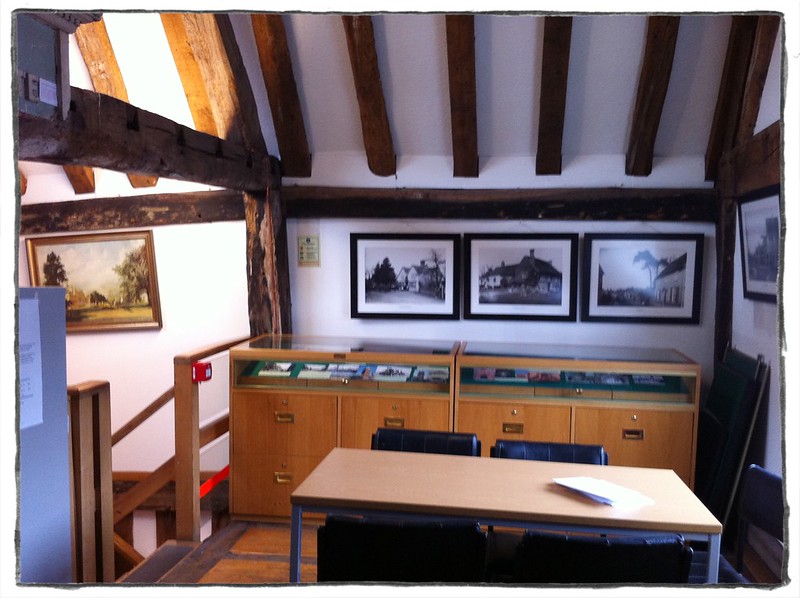
There are stairs in the foyer and the teenage section which lead up to the gallery. The first floor is used for library events and also houses the local archives and a local history display.
The fireplace and filing cabinets containing the local archives.

Display cabinets with local, historical information and the back stairs leading to the teen section.