Showing posts with label A Life in Letters. Show all posts

Monday, 30 September 2013

A Life in Letters - Here and Now, Paul Auster & J.M. Coetzee

Here and Now, Letters 2008 - 2011 by Paul Auster & J.M. Coetzee

I spend a lot of time researching what to read next. In fact, I think I spend more time discovering new books on various themes than actually reading. Despite this controlled and pre-planned approach to my reading I do occasionally read books (often rather good ones) which I come across in a more serendipitous manner. 

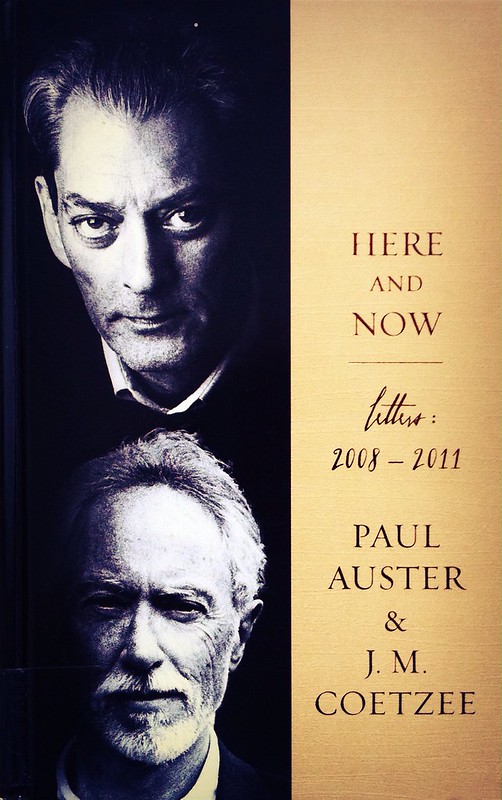
Here and Now belongs to this category of serendipitous finds. This book attracted my attention while I was browsing the 800s section (literature) in my local library. Faber and Faber did a great job of producing this collection of letters: it is a lightweight hardback book, with tasteful portraits of each author on the cover and it has wonderful chocolate brown end-papers (my favourite colour). As this is a collection of letters many pages feature quite a lot of formatting at the top of the page: date, address, Dear John or Dear Paul.  I liked the fact that the pages had been arranged with balance in mind by placing the authors' names (verso page) and the title of the book (recto page) at the foot of the page. 

The physical appearance of the book encouraged my to pick it up, but beyond aesthetics, I didn't know anything about it or have any preconceived ideas about what I would find inside, when I checked the book out. I have not read any of Paul Auster's writing and although I have read Disgrace I used to think that J.M. Coetzee was a woman, not a man (I also used to think that A.S. Byatt was a man and not a woman)!

I found the collection very readable indeed, and I think the diverse topics discussed in Auster's and Coetzee's letters would appeal to many people. Among other topics, they exchange ideas about sports (the concept of losing in individual games versus team games. Take singles tennis, for example, the majority of entrants in a tournament will be losers and not winners), the financial downturn and capitalism, film, how to deal with literary criticism and critics, the challenge of the digital age in novel writing,
"You say that you are quite prepared to write novels in which people go around with personal electronic devices. I must say I am not. The telephone is about as far as I will go in a book, and then reluctantly. Why? Not only because I'm not fond of what the world has turned into, but because if people ("characters") are continually going to be speaking to one another at a distance, then a whole gamut of interpersonal signs and signals, verbal and nonverbal, voluntary and involuntary, has to be given up. Dialogue in the full sense of the term, just isn't possible over the phone." [From J.M. Coetzee to Paul Auster April 2011).
And, discussions on the degradation of culture since the late 1970s, early 1980s (although, don't most people over the age of about 55 make a similar lament?).

In addition to containing interesting discussion on a varied list of topics, I also found the letters quite touching. The authors express delight at the opportunity of meeting each other in person at literary festivals (to be in the same place, at the same time is quite a feat as Paul Auster lives in New York City and J.M. Coetzee lives in Australia) and on return home from their meetings they say how much they enjoyed being able to spend some time together. The warmth that shines through their letters makes me want to pick up my pen and write an old-fashioned letter to a friend.

Sunday, 18 August 2013

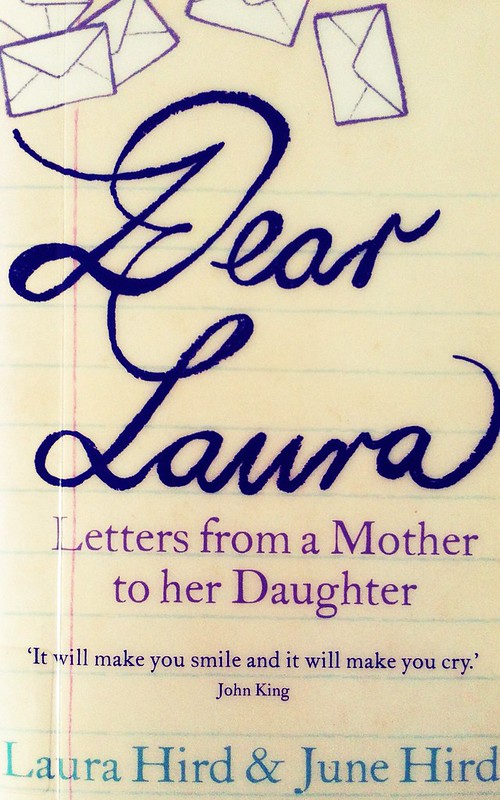
A Life in Letters - Dear Laura: Letters from a Mother to her Daughter

Dear Laura: Letters from a Mother to her Daughter - Laura Hird & June Hird


Elizabeth Chatwin, the widow of Bruce Chatwin said, "letters are the most vivid writing" and in reference to the book I read this week, I would certainly agree. The letters which fill Dear Laura are full of wit, sentimentality, sometimes admonishing, full of gossip and quotidian banalities, but always vivid and entertaining.

The majority of letters in Dear Laura cover the years 1988 - 1991, when, at the age of twenty-one, Laura Hird left her working-class home in Edinburgh to attend university in London. All bar one of the letters are from June to her daughter.

Laura is an only child, and despite a sometimes fraught relationship, the bond between daughter and mother is an incredibly close one. After signing off one of her letters, June writes "till midnight" as before leaving home Laura and her mother had agreed that every night at midnight, even though they will be 400 miles apart, they will think of each other and send good "vibrations" to each other. They also send a plastic, lucky horseshoe back and forth depending on who needs the most luck at any particular time, which reveals as much about Scottish culture as it does about the love and support mother and daughter show each other.

I can't say that I found the twenty-one year old Laura a particularly sympathetic character. In the letters she comes across as incredibly spoiled and struggling to survive her entry into independent adulthood after a sheltered childhood. Her mother often sends stamped addressed envelopes to London along with her own letters, which contain thank you notes for various friends and relatives who have sent Laura money or birthday cards and presents and all Laura has to do is pop them in a postbox in London, so they have the required postmark. In one letter June describes visiting Nannie an elderly relative who, "was in tears today about the beautiful letter you didn't write for her birthday fiver. It had pride of place on her sideboard and she made me sit and read the letter I had written, while she wept at how sweet you were."

June Hird is an accomplished letter writer (with the added ability of forging thank-you notes!) having had plenty of practice. At the end of one of her letters she says, "I must stop. I have 6 more letters to write." When was the last time you wrote one letter, let alone seven in one day? Her letters are often funny whether relating anecdotes of her daily life in Edinburgh or just expressing her thoughts. I was particularly amused by a discussion on the merits of coloured writing paper.
"Why is it healthy to write on technicoloured notepaper? - well according to a TV programme last week bleached paper contains the deadly poison dioxin. Tea bags, coffee filter paper, white tissues and toilet paper, disposable nappies and tampons, and notepapers are all suspect. Only recycled paper is safe.
Who wants to write a letter on a recycled tampon, toilet roll or nappy? Even if one does tend to write a lot of verbal diarrhoea, one doesn't need to have one's nose rubbed in it as a punishment. Thought-provoking, isn't it?"
If you are looking for a memoir about the relationships between mothers and daughters, read this book. However, don't be tricked into expecting a heartwarming tale of sentimentality, this is also a great read for anyone interested in late 1980s, early 1990s Britain: polytechnics, poll-tax riots, Margaret Thatcher and classic TV (I'd forgotten all about Lilo Lil from Bread). Dear Laura is a fascinating, easy-to-read piece of social history and a beautiful tribute to Laura Hird's parents.


Sunday, 28 July 2013

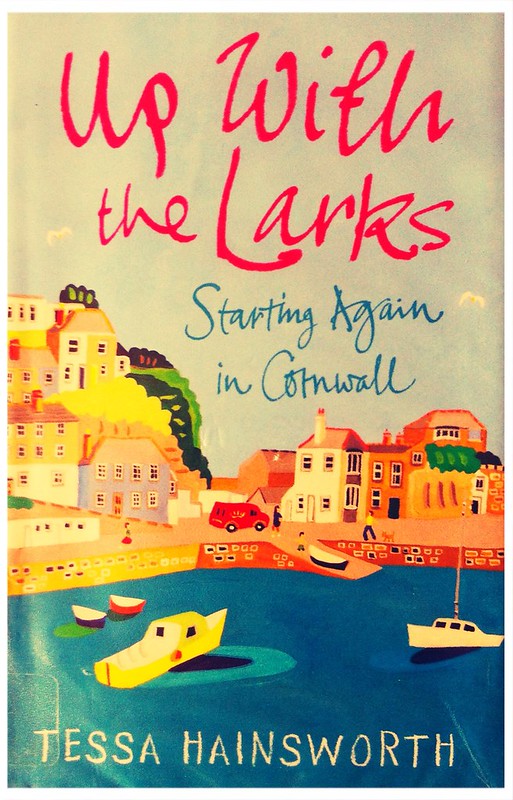
A Life in Letters - Up With the Larks: Starting Again in Cornwall

Up With the Larks: Starting Again in Cornwall - Tessa Hainsworth


I mentioned in my introductory post to A Life in Letters, that I would be reading a wide range of books related to letters and letter writing. This week instead of reading a collection of letters I read a memoir about a letter collector, i.e. the postman, in this case, a postwoman.

Up With the Larks tells the story of Tessa Hainsworth and her family as they adjust to life in a small seaside village. Tessa Hainsworth leaves her high-powered job in London and in an escape from the rat race, moves, with her husband and two young children, to South Cornwall. 

The book charts their struggles to keep financially afloat after their initial business plan designed to provide their livelihood in Cornwall collapses,
"Our golden dream was slowly turning to dust as we worried ourselves sick night after night. By this time we didn't even know if we could afford to move back to London, where we could at least find work."
Forced to find jobs, Tessa and her husband apply for everything from receptionist to taxi driver and supermarket assistant manager. Her husband ends up working multiple part-time jobs and Tessa, much to the surprise of her friends and family, gets a job with Royal Mail delivering the post.

Tessa is initiated into the life of a postwoman during the busy pre-Christmas delivery weeks by barking dogs, savage cats and suspicious locals. Ms Hainsworth's storytelling is both witty and engaging and the parts of the memoir that deal with her daily round and the lives of her customers (particularly the sympathetic descriptions of elderly Mr Hawker and the B&B owners Martin and Emma) make this book an enjoyable read.

There were elements of the writing that made me squirm in my seat and think that the book could have done with more strident editing. On its third appearance, I was thoroughly fed up with the figurative use of clotted cream, e.g. "one minute as thick as clotted cream and the next sparring with each other". Also, when her husband returns from providing a massage at the local, upmarket hotel she says, "I hope it was a rich Eastern European princess who was so thrilled by your exquisite application of healing oils and massage that she gave you a huge tip". Shouldn't that be Middle Eastern princess? I think you would be hard-pressed to find an Eastern European princess anywhere, let alone in Cornwall.  

Despite these pedantic niggles, I did enjoy this quick and easy read. Tessa Hainsworth's memoir must have enjoyed a measure of commercial success, as since the publication of Up With The Larks  in 2009 a further two books (Seagulls in The Attic and Home to Roost) about village life on the Roseland peninsula have been published.


Sunday, 21 July 2013

A Life in Letters - The Letters of Vincent Van Gogh, Part Two

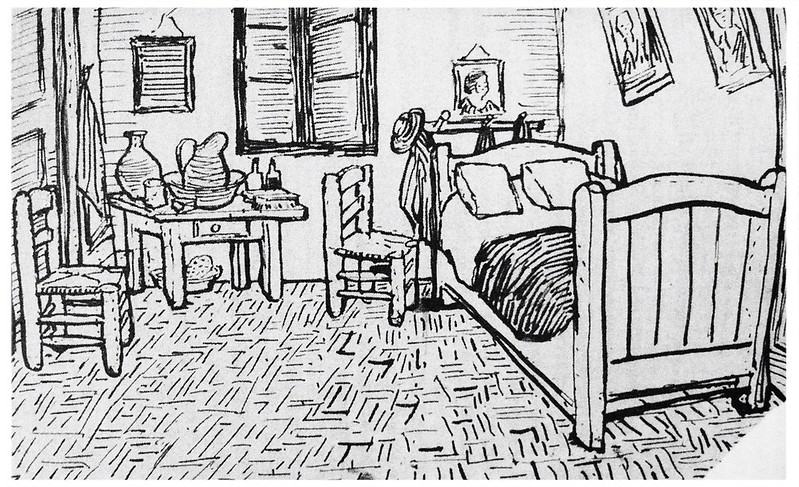
Enclosed sketch from a letter dated 16th October 1888.

I finished The Letters of Vincent Van Gogh this week and, I think I may have found a contender for my book of the year. 

Vincent Van Gogh's letters have been fascinating to read and have really changed any preconceived ideas I may have had about the great artist. I didn't really know that much about Van Gogh before I picked up this book - I love some of his paintings, but I had the general idea that he was a madman who cut off his ear and eventually committed suicide.

Reading these letters showed me a man who was dedicated to the creation of art and who longed for close relationships and a family, but who faced obstacles (poor health and poverty) in the pursuit of both of these goals. 

The letters in the second half of the book detail Vincent's disputes with his mother and father and the strain that this puts on his relationship with his brother Theo (to whom most of the letters are addressed). The close relationship which the Van Gogh brothers clearly had is one of the elements of the letters that attracted me when I started to read the book. That their relationship is sometimes strained is understandable when you take into account that Theo more or less supported Vincent throughout his adult life by sending him money to live and buy painting equipment.

Van Gogh's father died suddenly in March 1885 and from that time Vincent's relationship with his family (his mother and sisters) seemed slightly better. However, he still felt frustrated with Theo (an art dealer) who did not seem able, or willing, to sell any of his work neither as a professional nor in an individual capacity. 

In November 1885 Vincent moved to Antwerp to attend lessens at the Antwerp Academy, although at that time he began to have the idea that a move to Paris and the ability to study the works in the Louvre and the Musée du Luxembourg would benefit his artistic progression. He discusses a move to Paris with Theo, but before any definite plans can be made he takes any mutual decision-making out of Theo's hands by turning up in Paris in March 1886.

The fertile Parisian period of Van Gogh's life when he came into contact with Impressionism for the first time, met many artists (including: Toulouse-Lautrec, Paul Signac, Emile Barnard) and developed his style significantly is not well covered in his letters. He shared an apartment with Theo, so they did not need to write to each other.

Vincent's Parisian period ended in February 1888 when he arrived in Arles, Provence. These letters were some of the most interesting, for me, when Vincent is full of ideas for his artist's union (a concept he developed which was designed to provide artists with a measure of financial security), his excitement at all the subjects available to paint in the surrounding area, his improving health and artistic development, notably in his fascination with colour theory.

The final letter in the collection does not feel like a goodbye as it contains Vincent's customary order for more paints. Nevertheless, on the 27th July Vincent shot himself and died two days later in his brother's arms.

Instead of finishing this post with Vincent's death I will leave you with a quotation about technique and the creation of art (I wrote out so many little snippets as I was reading, but this is one of my favourites),
"That art is something which, though produced by human hands, is not wrought by hands alone, but wells up from a deeper source, from man's soul, while much of the proficiency and technical expertise associated with art reminds me of what would be called self-righteousness in religion."

If you can't wait for a trip to your local library to pick up the Letters, or if you really want to read more right now, you can do so online at this fabulous resource www.vangoghletters.org

Sunday, 14 July 2013

A Life in Letters - The Letters of Vincent Van Gogh

The Letters of Vincent Van Gogh


I am only half way through this collection (it is 500 pages long, so I will probably do a review of the second half next week). Although I have been slow with my reading this week it is not because this is a difficult read, in fact, quite the opposite. This is a collection to be savoured as, among other talents, Van Gogh was a fantastic letter writer.

The collection almost feels like a diary rather than letters as they are very personal and we only have one side of the correspondence. The book is filled, in the main, with Vincent's letters to his younger brother Theo, who must have been quite a hoarder as it seems that he kept every letter he received. There is at least one letter from Theo in the collection, but we only have that as Vincent sent the letter back to his brother with numbers in the margins as a time expedient way of responding to his brother's criticisms (Vincent had just had a blazing row with his mother and father and been thrown out of the house).

The letters start three years after Vincent began working at the art dealers Goupil & Cie. He begins his career in the Hague and then is transferred to the London branch in June 1873. Vincent eventually loses his job with the art dealers and spends some time working as a teacher before returning to the Netherlands and working in a bookshop. This period, when he loses his job in London and returns to the Netherlands to work in a bookshop, is Vincent's religious period and his letters are full of his plans to follow his father into his noble position as a clergyman. During a period working as an evangelist in a mining village in Belgium, Vincent decides to become an artist. The letters have not been as full of art as I would have expected (he mentions his predilection for Ingres paper (a type of drawing paper), live models for his drawings and the problems of finding a suitable studio), but I think that the focus on art and painting will increase in the second half of the collection, now that he has abandoned his religious leanings and his infatuation with his cousin Kee Vos.

Almost thirty pages of the book are taken up by Vincent's love problems. He falls violently in love with his widowed cousin Kee, who tells him that she could never be with him. Despite this setback, Vincent continues to ask her father for her hand in marriage and the letters of this period detail his perseverance in the face of adversity and his family's increasing discomfort in the face of his obsession.

These letters seem to contain all sorts of thoughts and feelings that many others might choose to write in a diary rather than in a letter. Vincent seemed to recognise the dramatic and revelatory nature of his letters, as in one letter he writes,
"Write to me soon and try to separate the wheat from the chaff in my letters. If there is some good in them, some truth, tant mieux,* but there is, of course, much in them that is more or less wrong or exaggerated perhaps, without my always being aware of it."
* So much the better.

It is this, I suppose, that makes the letters so readable.


Sunday, 7 July 2013

A Life in Letters - Dear Friend & Gardener

Dear Friend & Gardener: Letters on Life and Gardening by Beth Chatto and Christopher Lloyd


This is the first post for my Sundays in summer theme: A Life in Letters.

Dear Friend & Gardener is slightly unusual for a letter collection between two correspondents as it was published, in 1998, whilst both writers were still alive (Christopher Lloyd died in 2006). As both Christopher Lloyd and Beth Chatto are very popular garden writers, I suppose the publisher thought that a series of letters written by the two friends, over the space of two years (1996 and 1997), about gardening and their wider lives would sell well.

The letters didn't feel particularly contrived when I read them, and as Christopher Dixter writes in his last letter of the series,
"The main difference, from a totally private letter, is the extra explanatory matter that is necessary, as, in this letter, 'the autumn-flowering Crocus speciosus'. Obviously, 'autumn-flowering' would be omitted in a wholly private letter, as we both know this perfectly well. Apart from that, perhaps the odd indiscretion had to be foregone, but nothing much."
Perhaps, "the odd indiscretion" would have made the collection more thrilling to read, but I was happy enough with Chatto and Lloyd's discussions on plants, planting trends, fellow horticulturalists and horticultural students, the vagaries of the English weather, reminiscences of previous lecture tours they had taken together,  health problems, Glyndebourne and opera, family and friends and from Christopher Lloyd lots of news about Fergus (Fergus Garrett is now head-gardener at Great Dixter).

In addition to singing Fergus' praises in nearly every letter, Christopher Dixter also mentions his dogs a lot. Canna, in particular, gets plenty of mention in his letters, probably because at the beginning of the collection she is only about 6 months old and is not fully trained (or, perhaps she is, and she is just naughty). Some of his comments on Canna's behaviour were really quite disgusting: "Canna greeted me effusively, when I called the dogs, early this morning. That is ominous. She usually lies in bed. Sure enough, she had left me a 'present'. After I had rubbed her nose in it, she knew that that was over, and was effusively affectionate." He is obviously very attached to his "girls" as he calls them, and his letters see him relaxing on a sofa with the dogs alongside his right leg and sitting in the garden with his dogs at his side.

If you like gardening then this letter collection is definitely for you. However, if you have a passing interest in gardening but like to read about genteel days gone by then this collection would also appeal to you. There was something quite touching about these letters written by two (sometimes quite opinionated) experts in their field who were facing the challenge of dealing with the constrictions of aging bodies, if not, minds.


Saturday, 6 July 2013

Summer Recess - A Life in Letters

A Life in Letters


Much as I am enjoying reading a short story, or a whole collection, every week,  I decided to have a change of theme for Sundays in the summer: The Library File's summer recess.

Throughout July and August I will be reading letter collections or books associated with letter writing and posting about what I have read on Sundays. I flirted with the idea of naming this theme "Literary Letters on a Sunday"; however, when it came to sourcing books from the library to read I discovered that some of the collections I was really interested in were not written by literary figures, so most of the books I will be blogging about will be literary letters but with a sprinkling of something else too.

If you have written a review of a letter collection please feel free to put a link to your blog post in the comments section of my Sunday posts.

Short Story Sunday will return in September.