Showing posts with label Higher Education libraries. Show all posts

Wednesday, 19 June 2013

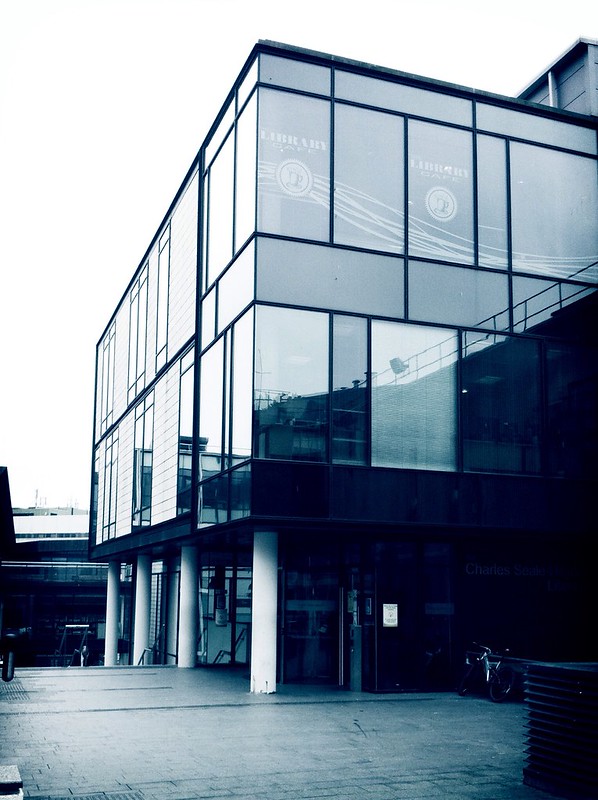
Charles Seale-Hayne Library, the University of Plymouth


The Library at the University of Plymouth allows members of the public to visit for free and, on production of ID showing current address, use the facilities on a reference only basis. I was interested to learn that the Library also allows members of the public and corporations to pay a membership fee allowing them to borrow books.

The Library holds over 500,000 books and 22,000 journals with particularly strong art and law collections. When I visited, the library was half-empty as the undergraduates have already departed for the summer and the few remaining students were hard at work at the numerous study desks (individual carrels and group study tables) or quietly enjoying a coffee in the Library cafe.
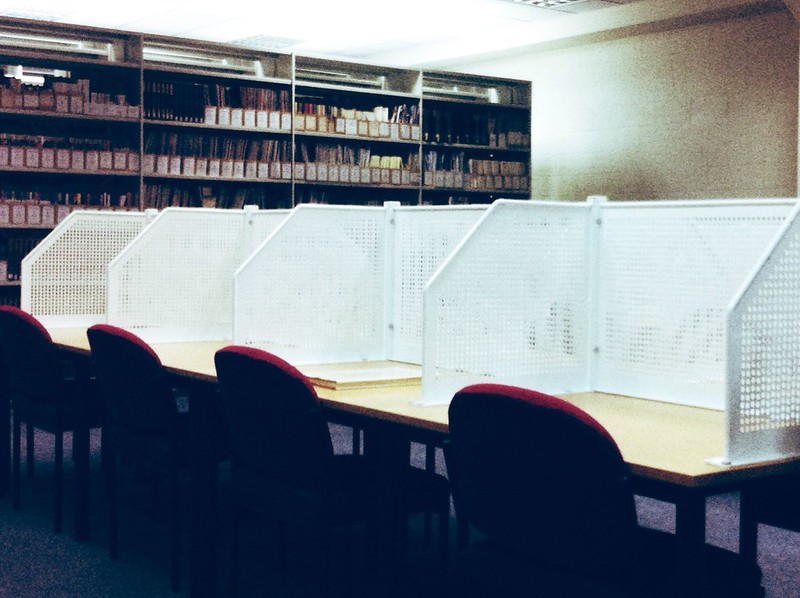
My preferred style of study desk.
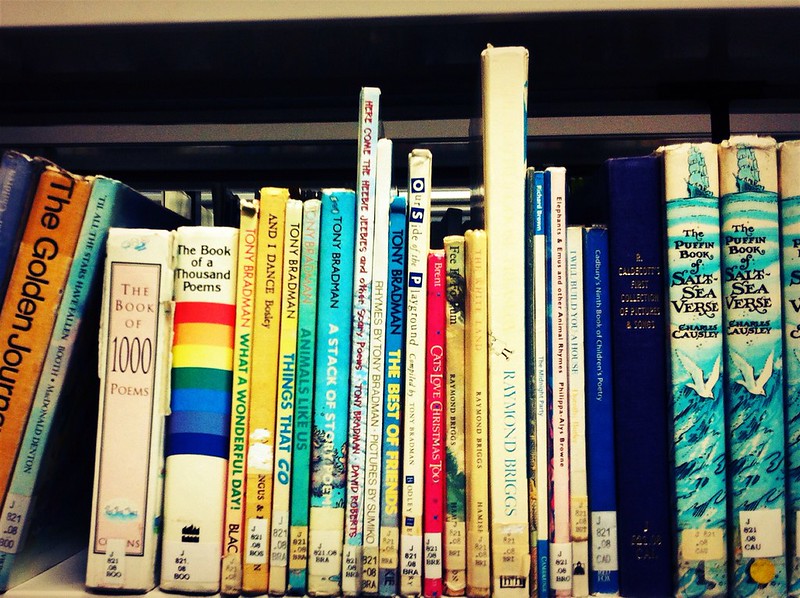
There are separate study rooms on each floor of the library: quiet study, silent study and casual study (what's casual study?), but despite all these other non-book areas, the collection seemed huge with long rows of shelving packed with illuminating volumes. There is also a very interesting collection of children's books in the School Experience Collection which is designed to help teacher training students with their studies. I have not seen such a collection in a university library before and I was delighted to stumble across shelves of children's poetry anthologies, not what I was expecting to see, at all!


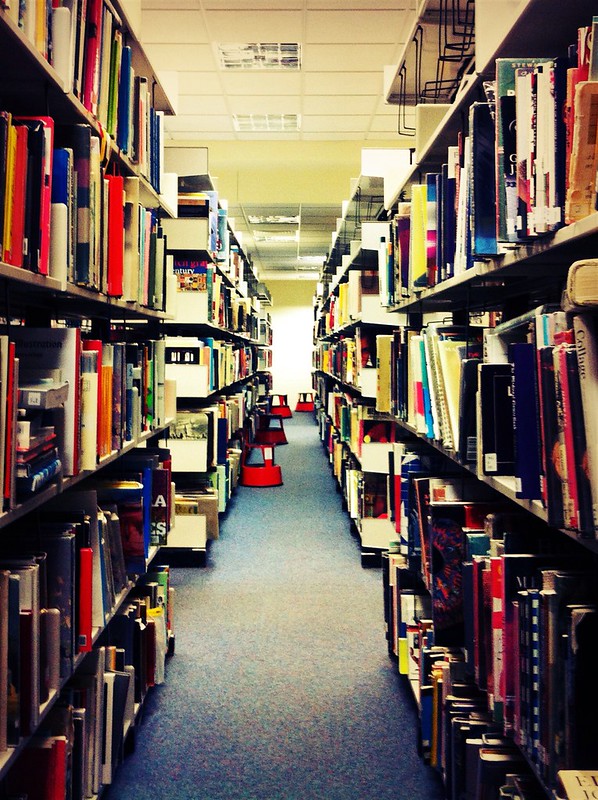
I spent most of my visit on level 0 browsing the books in the 700s, the Library uses the Dewey Decimal system and is well laid out making it very easy to use for a first time visitor. As you can see from the photo below, the reading room is large and contains an extensive collection of art books from volumes about famous art movements to art and science and a noteworthy collection of Artists' books.
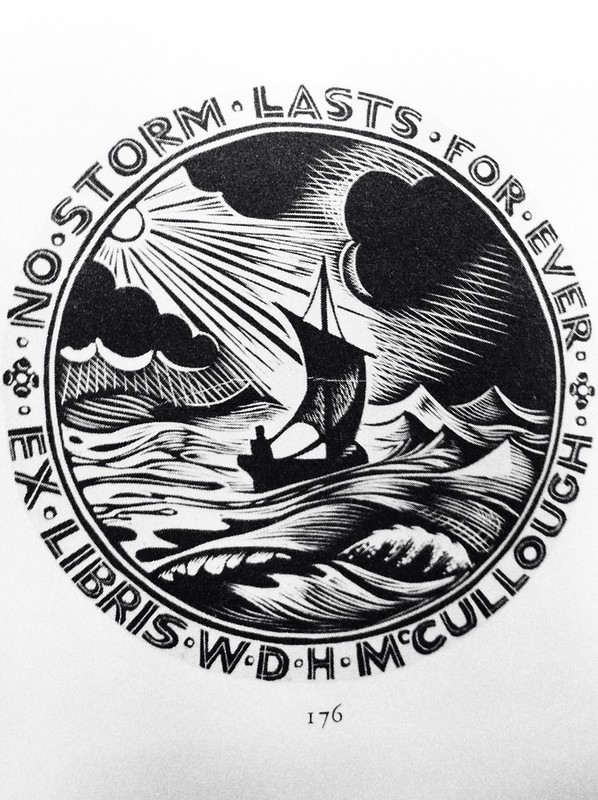
 I found another book to consult on the subject of bookplates (my current passion): British Bookplates: A Pictorial History by Brian North Lee. My favourite designs were the two below:


Although the bookplate designed for Granville Barker is quite simple I found it intriguing: is the figure trapped by books and wants to escape (a strange image for a bookplate), or do the books represent an accumulated understanding and appreciation of the wider world?

Unlike some university libraries, the Library at the University of Plymouth does not restrict members of the public to 3 or 4 visits per year only, so I hope to make use of this wonderful resource again in the future. If you are in Plymouth and have an interest in art I highly recommend a trip to the Library.

Wednesday, 5 June 2013

Plymouth College of Art Library

I always assume that as a member of the public I may not have access to libraries of academic institutions. In Plymouth, thanks to an initiative called Learning through Libraries in Plymouth I can access the libraries of a number of institutions on a reference only basis. I made use of this wonderful initiative today and took a trip to the Library at the Plymouth College of Art.


The Library, situated on the third floor of the building, was not really what I was expecting: the college building has a modern-looking, dramatic facade and I thought the Library would be a spacious, airy, tiled-floor sort of space. It was not like this, at all. The Library was smaller and drabber than I thought it would be - more like a medical library and less like a place to keep information on the visual arts.


The College is currently undergoing a £7.7 million extension (due to open in September 2013), but as far as I know the extension does not mean change for the Library. Although I was not enamoured with the physical space, the Library has an excellent collection of journals (over 100 different titles), plenty of individual study spaces (with laptops) and a group study area too - all the students sat at the individual study desks were talking to each other anyway when I was there, so maybe the whole area should be renamed "group study". The Library holds almost 16,000 books, which seems like quite a small number for an academic institution (Falmouth College of Art holds 50,000 volumes, for example).

Despite being slightly taken aback by the small size of the Library, I was very pleased to find what I was looking for on the shelves. In addition to my interest in libraries, in general, I was hoping to spend some time referring to a book on my new obsession - bookplates.

The book in question, A Treasury of Bookplates from the Renaissance to the Present by Fridolf Johnson was a fabulous resource, and I am very pleased that I was granted access to it.

I am toying with the idea of designing myself a bookplate at the moment. Do you have a personal bookplate? If yes, did you design it yourself, buy a ready made one, or commission an artist to design one for you?

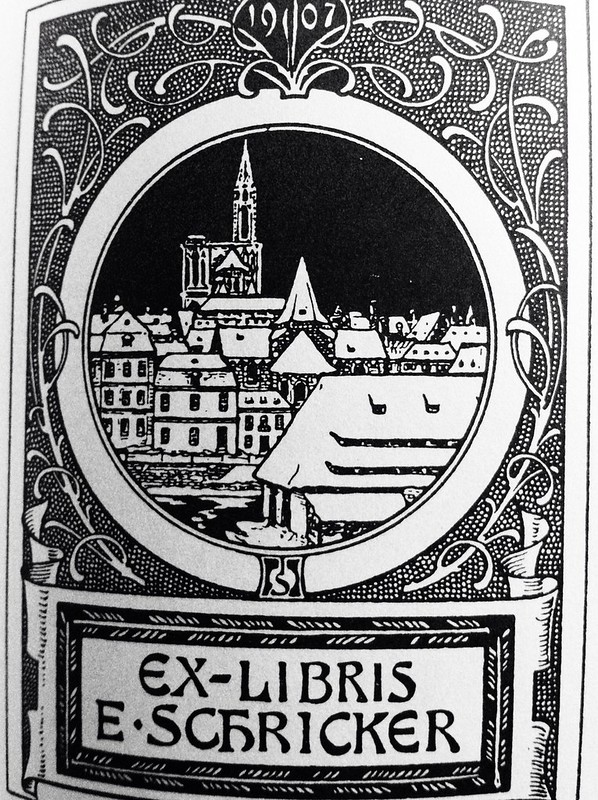
Here are a few of the bookplates from the above mentioned book:


I