The Mitchell Library
The
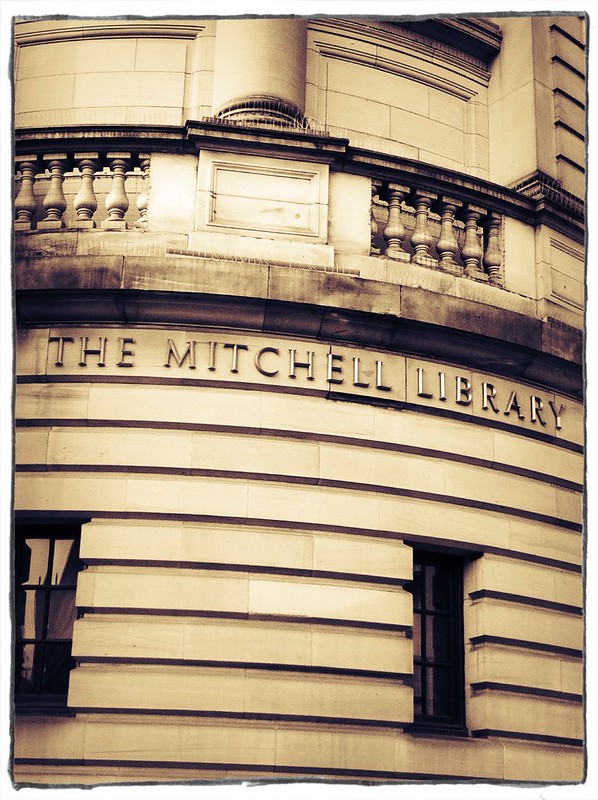
Mitchell Library is one of Europe's largest public reference libraries and holds over a million items including the largest Robert Burns collection in the world. I had the opportunity to spend a few days in Glasgow last week and this library was my first port of call.

The Mitchell Library was established thanks to Stephen Mitchell, a wealthy tobacco merchant. On his death, in 1874, he bequeathed his estate to the town council for the establishment of a free public library. The library opened its doors, with an initial stock of 14,000 volumes, in November 1877. The Mitchell Library began its life in temporary premises on the second floor of a building in Ingram Street. In its early years, the Library received many valuable donations and it quickly outgrew these premises. The Library's first move was to Miller Street, to premises which had been furnished at great cost, including electric lighting (with a gas backup system); however, from the beginning these premises were too small for the ever increasing library stock.
A purpose built library was planned and the foundation stone for the new building was laid, by Andrew Carnegie, in 1907. This new building, the Mitchell Library of today situated on North Street, was finally open for business in October 1911.
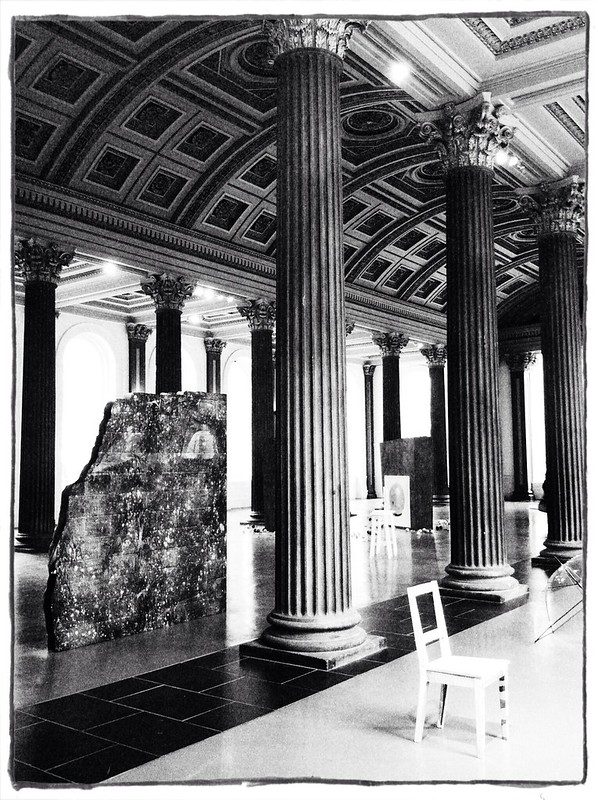
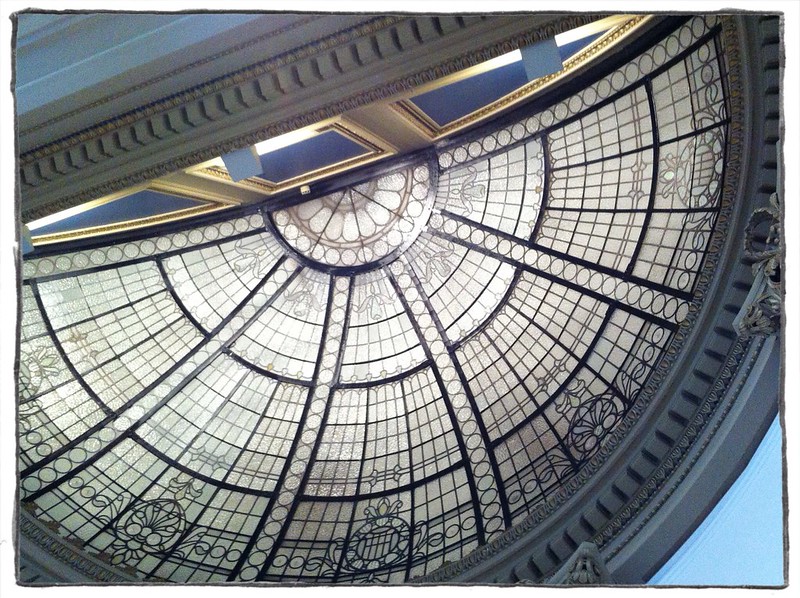
I entered the Library from the North Street entrance. This entrance brings you onto level 1 of the library which houses the Main Reading Hall - it was closed when I visited as it is now used as an exhibition space, this was a real shame as it sounds like a beautiful room with a glass ceiling and decorative plasterwork. You can also find Business at The Mitchell which is the information point for all things business related: access to market research, company accounts and reports and funding opportunities for small businesses.
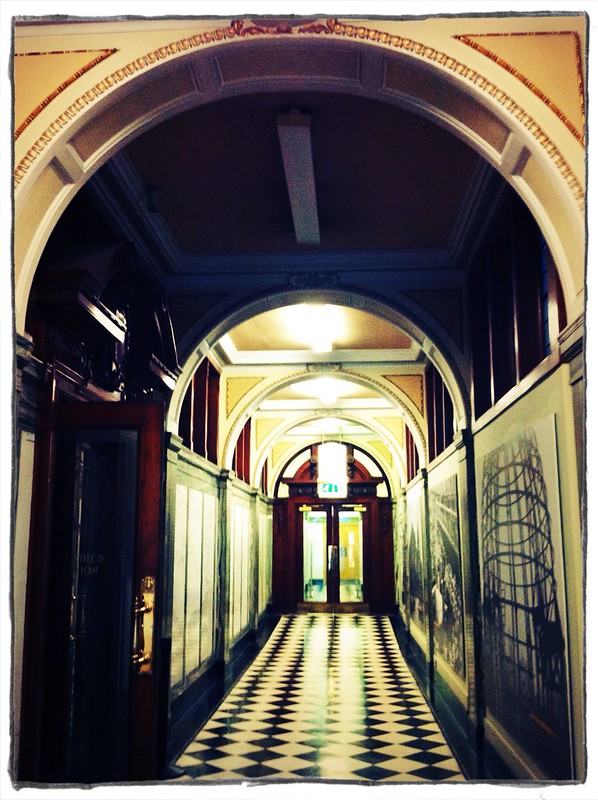
I felt a little bit lost when I entered the building as you have to walk down a long corridor before you come across Business at The Mitchell and then after this section you find the lifts with a building directory.
 |
| Corridor leading from the entrance on North Street through to the lifts and access to the other levels of the Library. |
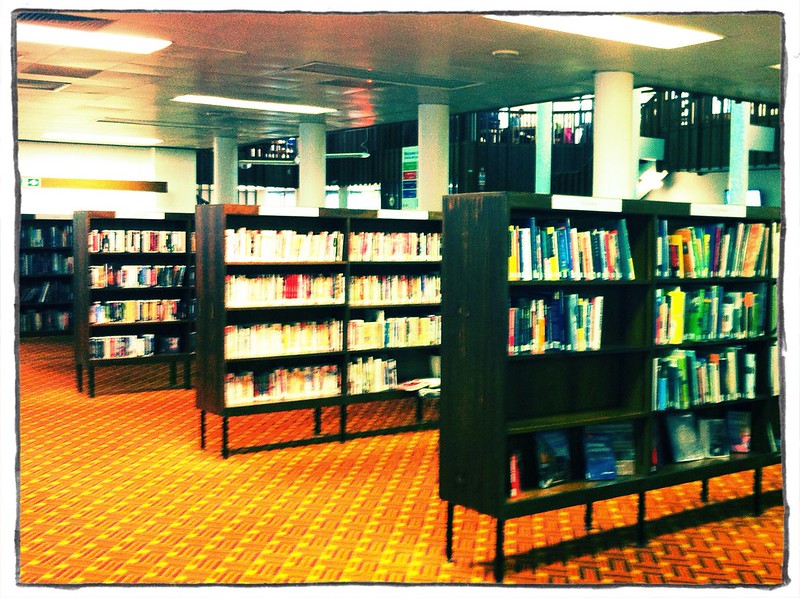
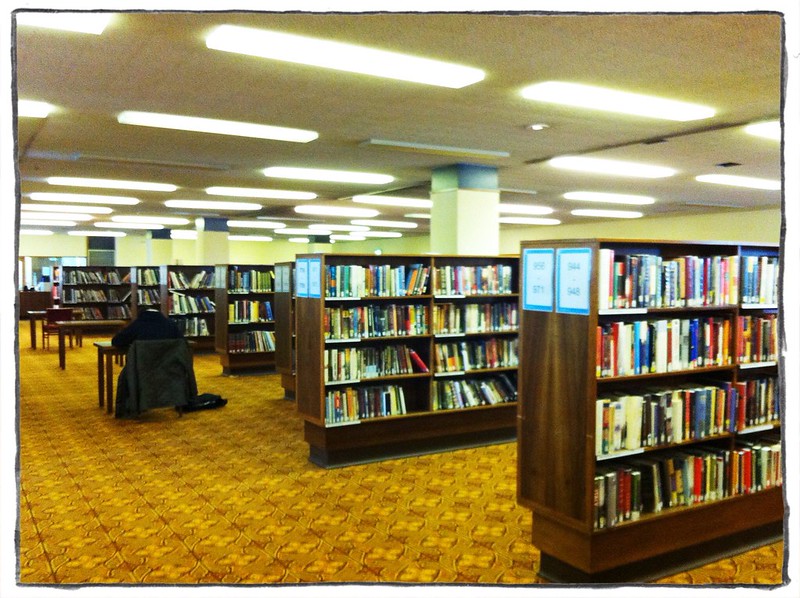
Once I found the lifts, I travelled up to the top level (level 5) and worked my way down from there. Level 5 houses books from classmark 700 to the end of the classification. There is a separate glass-panelled room for all subject matter relating to literature that also has plenty of study desks. In addition to the main areas with the stacks, there is a separate, large reading room for silent study.
 |
The large number of strip lights should give an indication of the size of this room
- classmark 700 - the end, minus 800 (literature) which is housed in a separate area. |
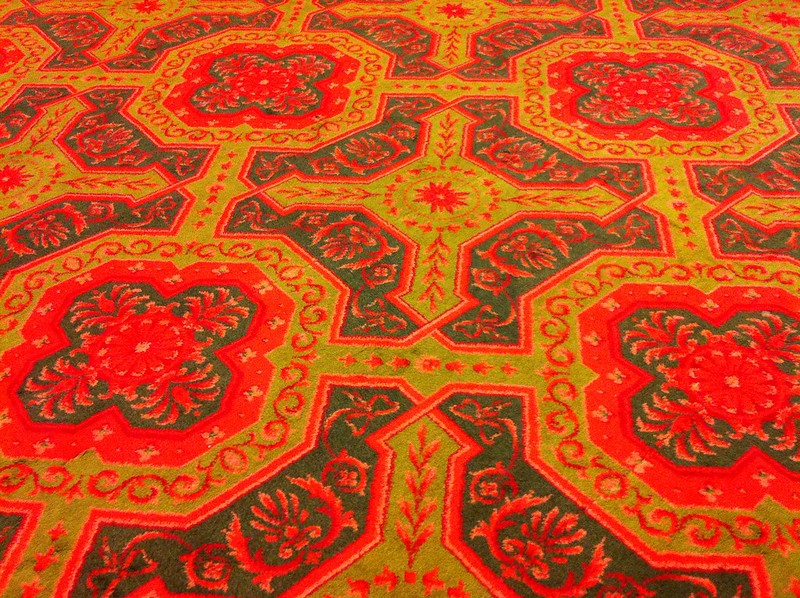
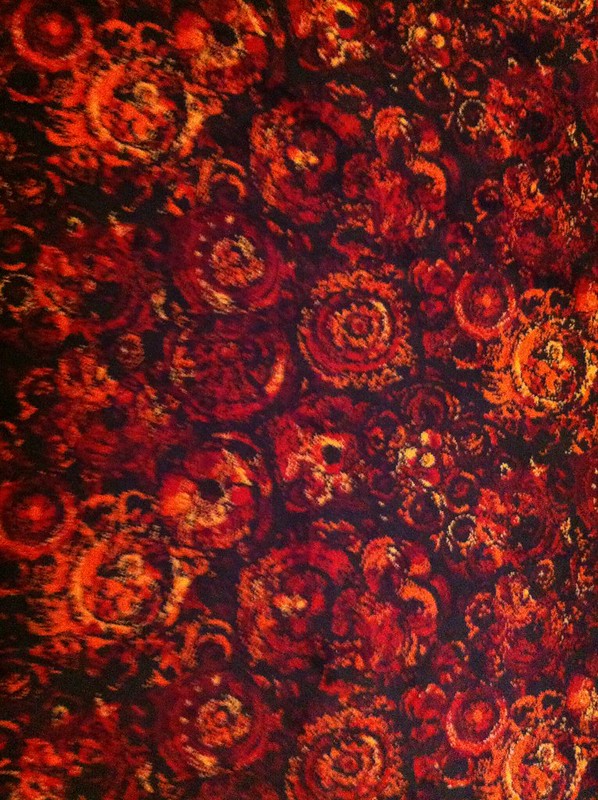
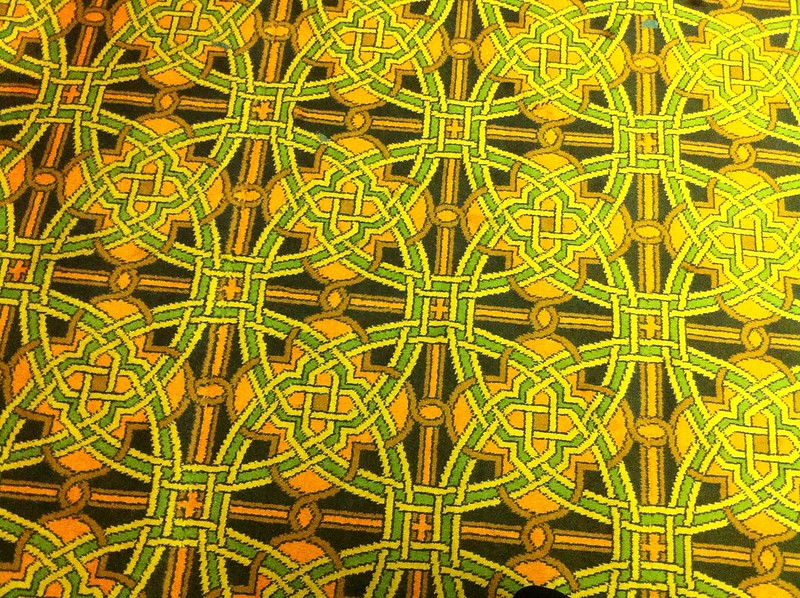
I was really impressed by the large stock that was visible on the shelves and I felt like I was in a university library, not a public library. I'm not sure if I could read and study effectively in this environment though, as the psychedelic carpets gave me a bit of a headache. As if one carpet wasn't enough, on this level there are three different brightly patterned carpets!
 |
| Carpet number 1. |
 |
| Carpet number 2. |
 |
| Carpet number 3 which is used in the hallways of levels 2 - 5. |
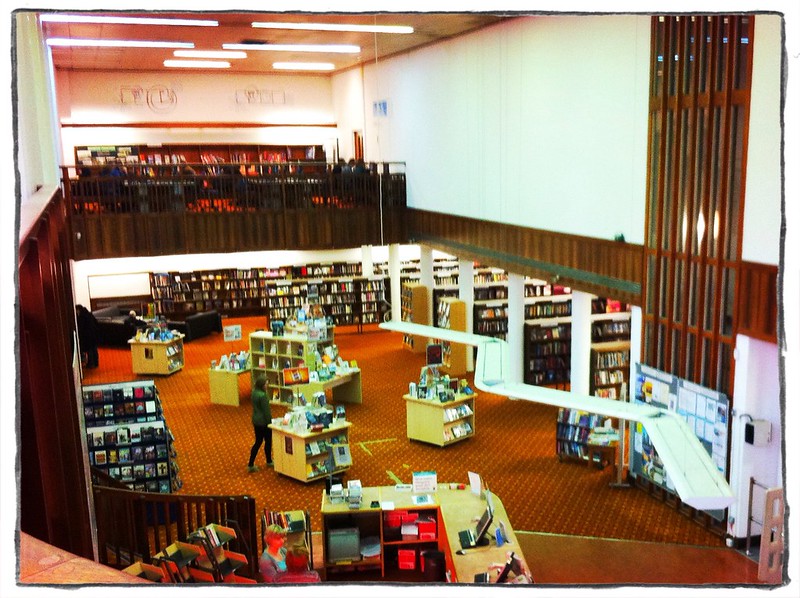
Level 4 contains more books (classmark 000 - 699) and a Scots Law reference section. The most interesting area I found on this level, and something that I have not seen in any other public library, was the music practice carrels where musicians can practice their own instruments or borrow the library's piano. This level also showcased three garish carpets: the red, floral pattern in the hallway (as above) and two further woolen marvels.
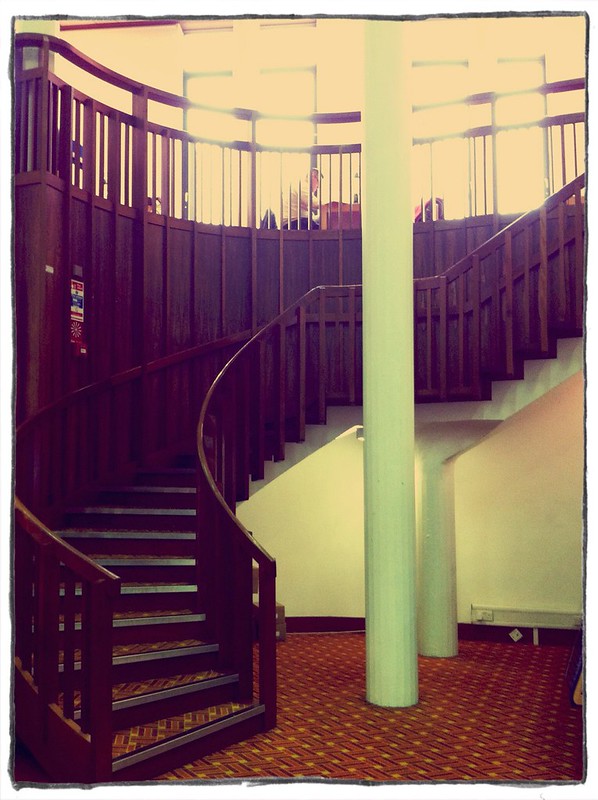
On level 3 you can access family history documents and the Genealogy Centre run by Glasgow Registration Services. There are two funky carpets on this level: the floral catastrophe in the hallway and my favourite floor covering of the building: a brown, gold and orange affair with pictures of an oak tree and an open book.
 |
The oak tree forms part of the city of Glasgow's coat of arms
(it is one of the emblem's of Mungo, the patron saint of Glasgow). |
Level 2 houses the city archives with both an open access section and a closed access section with valuable documents which requires bags to be left in lockers before entering.
 |
| The Celtic knot design seemed quite suitable for the archives. |
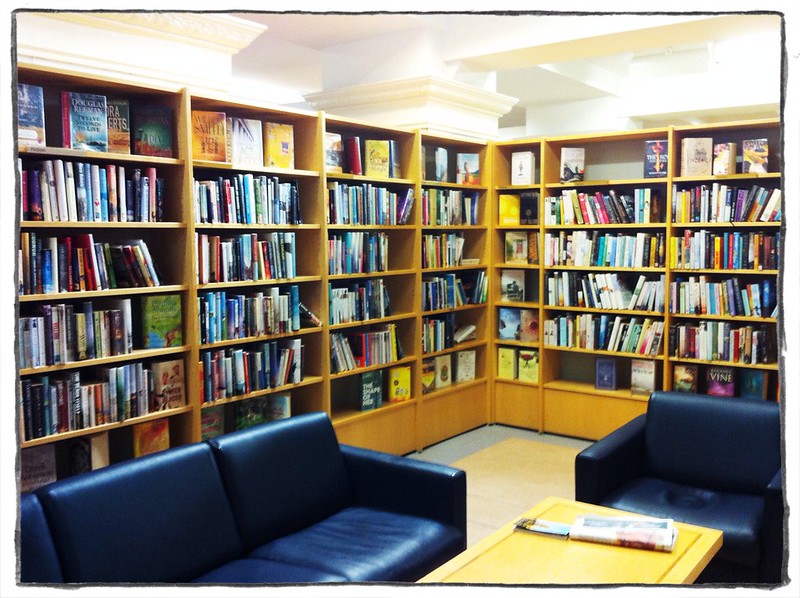
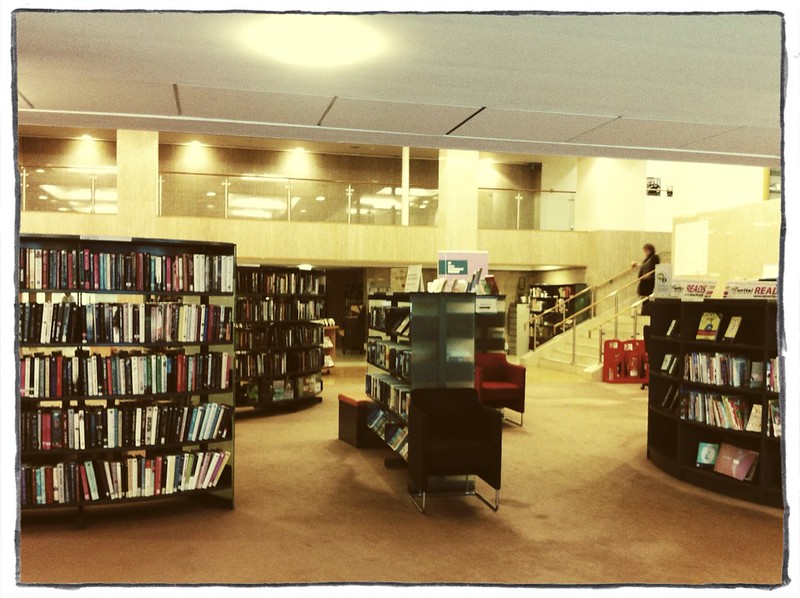
I missed out level 1 on my way down and went straight to the ground floor. This floor of the library looked very modern (notice the plain, subdued carpet) and contains material that you would expect to find in any public library: popular fiction, the children's library, audio CDs and DVDs. There is also a cafe, the issue and enquiries desk and a large information area with 50 PCs.
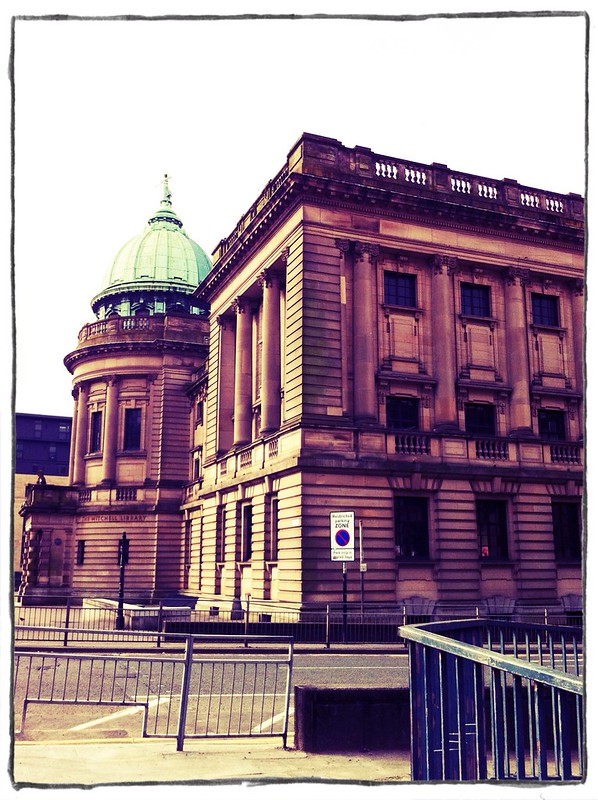
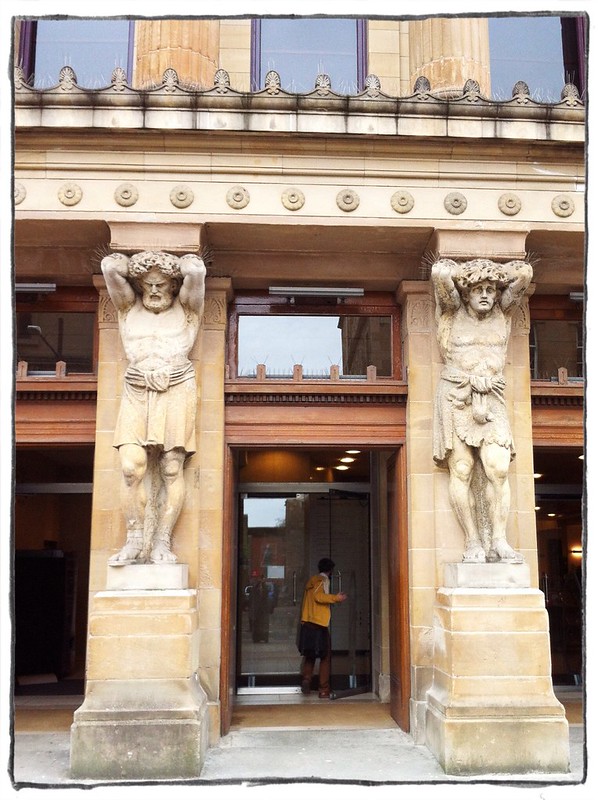
I exited the library through this level on Granville Street. In fact, for first time visitors and library users requiring direction and assistance, the entrance on Granville Street is more suitable than the North Street entrance; the layout seems to make more sense if you start with this section on the ground floor (I didn't realise this when I visited).
 |
| The entrance on Granville Street. |
 |
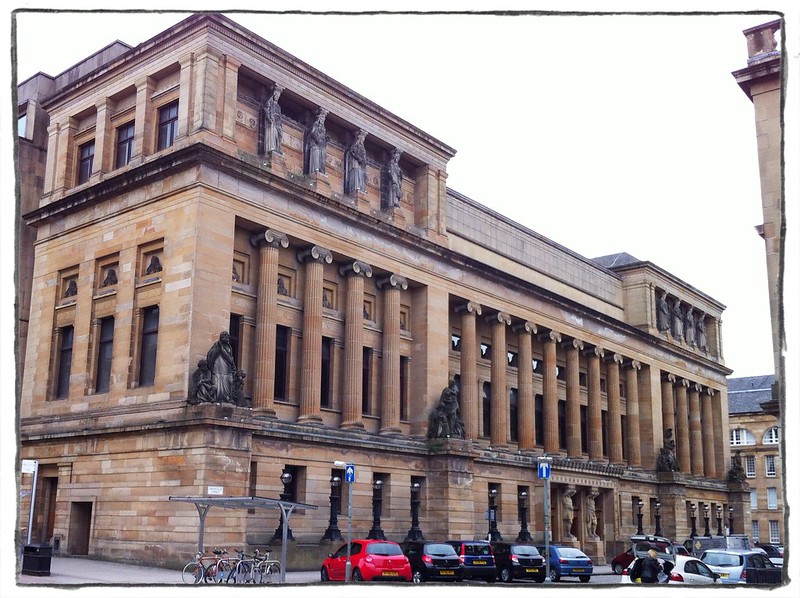
| The Granville Street side of the Library. |
The residents of Glasgow are truly blessed to have such a wonderful library to use. I could quite happily have spent all my time in the city in this library, but I decided to see what else the city had to offer in terms of library provision. I visited two other libraries: profiles and pictures to follow soon.