Sunday, 21 April 2013

Short Story Sunday - Guy de Maupassant

On Horseback and Other Stories - Guy de Maupassant
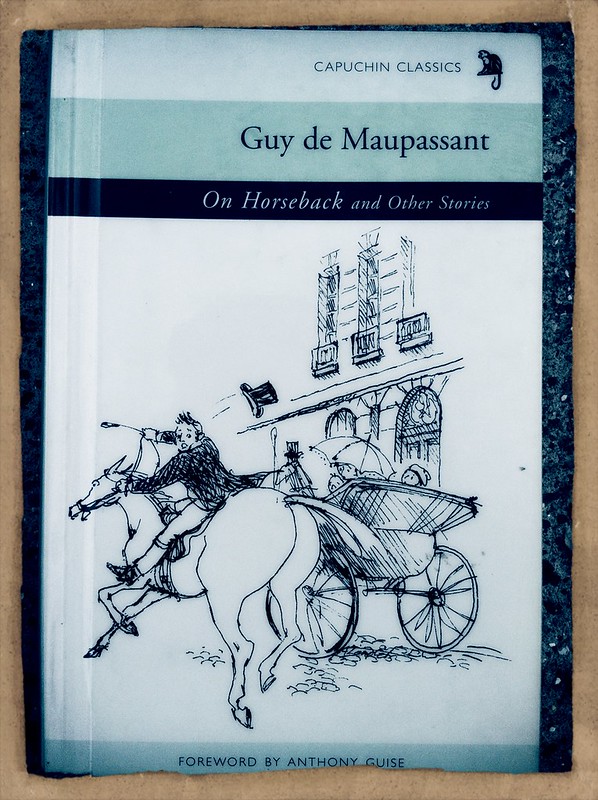


Published by Capuchin Classics in 2008, this collection contains nine stories which originally appeared between 1877 and 1891:

  • On Horseback
  • Madame Tellier
  • Mademoiselle Fifi
  •  That Pig of a Morin
  • The Horla
  • The Necklace
  • The Piece of String
  • Two Little Soldiers
  • The Christening

The stories chosen for the collection are generally quite short - the longest tale and the only one I didn't enjoy is The Horla at 28 pages -  they are a varied bunch: some simple and light-hearted, some cynical and depressing and although the stories are not moralising they make profound points about life and society which leave you pondering the events of the story afterwards.

My two favourite stories from the collection: the title story and The Necklace are very similar. Both stories are set in Paris and feature middle income families showing off in an attempt to elevate their social status; both stories end in disaster, with the characters in a worse situation financially than they were before.

Other themes developed in the collection are: the betrayal of a friend, nationalism in the form of mocking occupying soldiers, how to deal with supernatural forces, the loss of reputation and how one's youth and status can result in less severe repercussions for unacceptable behaviour.

As I am taking part in Zoladdiction this month, I was very excited to see one of his novels, L'Assommoir, mentioned in the final story, The Christening. The narrator of the tale, a ship's doctor, says that we may have read about the evil effects of alcohol in "that admirable book entitled L'Assommoir" but that he has seen even worse results of "the divine poison" during his years as a doctor. He relates the story of a family in Brittany who end up in the most distressing situation as a result of their hard drinking. This really was a shocking story and as it was the last in the collection it made a lasting impression.


Wednesday, 17 April 2013

Zoladdiction - Week Two Thoughts

Reflections on Germinal

I finished Germinal a couple of days ago and I am still reeling from the denouement. I don't really feel like starting another book at the moment, but as I am taking part in a challenge I shall press on!

The last one hundred pages, or so, found me on the edge of my seat with my mouth agape and a fair few tears springing to my eyes. I don't want to include any spoilers as, perhaps, someone who is planning to read Germinal will read this and feel cheated.

The parts of the novel which particularly captivated me were the references to the French Revolution: I noticed three (Cecile offering La Maheude's children brioche which instantly brought the famous fiction of Marie Antoinette saying, "Let them eat cake!" to mind; the striking miners' shouts of "bread, bread, we want bread"; and also the singing of the Marseillaise) although I am sure someone with more knowledge of that period would pick up many more references. I also really liked the development of the relationship between the children Lydie and Bebert (I don't think I shall ever forget their final scene) and I was drawn in by the pathetic lives and fates of all of the animals in the book.

After reading the book I had a look for a film version on the internet. I found the 1992 French production with Gerard Depardieu and Renaud on YouTube, although it has been dubbed into Spanish. Even though the film is long (two and a half hours), certain elements are not included which I felt changed the feel of the story - the miners seemed idealised as if the story had been given the Hollywood glow, for example, Jeanlin's character was not developed fully - nevertheless it is a very enjoyable film.

An Afternoon in London

Foyles on Charing Cross Road
I had the opportunity to spend a couple of hours in London yesterday afternoon. I planned a varied itinerary of library visits and a trip to my favourite London bookshop to pick up Zola's The Masterpiece, which I reserved prior to my visit. Of course, just a couple of hours in a large, busy city is not really much time at all, and after an airless, itchy-sheet night in a hotel I didn't have the energy to carry out all my plans. I decided to focus on my bookshop trip and try to get a bit of reading done.

I haven't visited Foyles in about ten years, but it is still as well-stocked and fun to browse in as I remember. The store now houses one of my favourite specialist bookshops, the language bookshop - Grant and Cutler. I didn't realise until I looked at the Foyles website that they had moved from their home on Great Marlborough Street. Although, I used to love their cluttered, floor-to-ceiling shelves and the fact that the further you went in the darker it got like some kind of treasure cave, their new space on the first floor of Foyles is, perhaps, easier to browse. As I was just browsing for fun and not requiring a particular text or any assistance, I can't comment on how their service may have changed since the move to Foyles.

The cover art of some of the French editions of Zola's work stocked by Grant and Cutler
After collecting my new Zola book, I picked up a coffee and headed off to the British Museum. Yesterday was the first time this year that I actually felt warm walking around, so I sat outside the museum to drink my coffee and start The Masterpiece. Sitting, soaking up the warmth of the sun reflected off the Portland stone of the museum created a contrast between the dark, stormy night in Paris that begins Zola's novel. I was worried that I wouldn't be able to get into another novel for a while, after Germinal, but The Masterpiece seems like it is going to be very interesting too and I am already intrigued by the personality of Claude Lantier.
The Masterpiece at the British Museum

Sunday, 14 April 2013

Short Story Sunday - Rene Bazin

Rene Bazin - What the Wind Replied and The Birds in the Letter-Box


To continue the April, French theme, I read two stories by Rene Bazin, this week. 

Rene Bazin (1853 - 1935) was a law professor at the Catholic University in Angers and a novelist of provincial life. He had a traditionalist outlook and his works show a love of nature and the simple, pastoral life. In his day, he was an influential member of the group of traditionalist, Catholic writers that also included: Maurice Barres, Georges Bernanos and Francois Mauriac. I was rather disturbed to find his works described as "obsolete" by the Encyclopaedia Britannica; the two stories I read both had simple and enduring themes which in no way renders them "obselete". 

What the Wind Replied is about a young boy and his mother. The beginning of the tale finds the family living in a house by the sea. As the boy grows up he becomes attached to the idea of a life at sea as his father before him had (his father was a sailor who died at sea). The boy's mother wants to protect her son from the dangers of the sea, so the family moves inland and she seeks to entertain him with new pursuits and a love of the forest, hoping that he will forget about his passion for the sea and his desire to live his life on the ocean waves. The boy pines for his first love and eventually falls ill. Despite the loving attentions of his mother and the professional care of a doctor, the health of the little boy does not improve. The mother comes to realise that she cannot protect her son from his desires and the dangers of the world; if she wants him to recover she needs to give him the thing he wants most - a return to the sea. 

In The Birds in the Letter-Box an aged, country priest lives out his life surrounded by his fecund kitchen garden and the numerous birds that steal his fruit. One summer, he discovers that a family of tits are nesting in his letter box, he doesn't think that the birds will cause a great deal of inconvenience as, like the rest of the village of St Philemon, the priest sends more letters that he receives. 
"The postman had little to do on his rounds but to eat soup at one house, to have a drink at another, and, once in a long while, to leave a letter for some conscript, or a bill for taxes at some distant farm."
However, just at this time the bishop in the chief town of the region meets with his assistants to discuss forthcoming appointments and promotions. He nominates the priest of St Philemon as the new priest of another parish in recognition of his years of virtuous service. The bishop sends a letter requesting a response to the offer as soon as possible. Of course, the priest at St Philemon does not receive this letter for weeks, as he refrains from checking the letter-box until the fledglings have flown the nest.

As soon as the priest receives the important missive he rushes off to the bishop's palace to explain the situation. He returns to his parish without a promotion, and, although he had never been ambitious, he says to his housekeeper, "Next year, Philomene, if the tomtit comes back, let me know. It is decidedly inconvenient."


Tuesday, 9 April 2013

Zoladdiction - Week One Thoughts

Germinal


The first novel I chose to read for Zoladdiction is Germinal, published in 1885. I decided to start with this book for two reasons: i) it comes chronologically before my other choice (only just, as The Masterpiece was Zola's next work published in 1886) and ii) we are currently in Germinal (21st March to 19th April, the seventh month of the French Republican Calendar) and I thought it would be fun to read the novel of the same name during this time.

I was attracted to Germinal by the themes of working life in a mining community, workers rights and political awakening. I haven't been disappointed. I have now reached the first chapter of part V and I have loved every page. Zola's writing is incredibly vivid and descriptive and it feels like he is reporting back after an assignment shadowing coal miners.

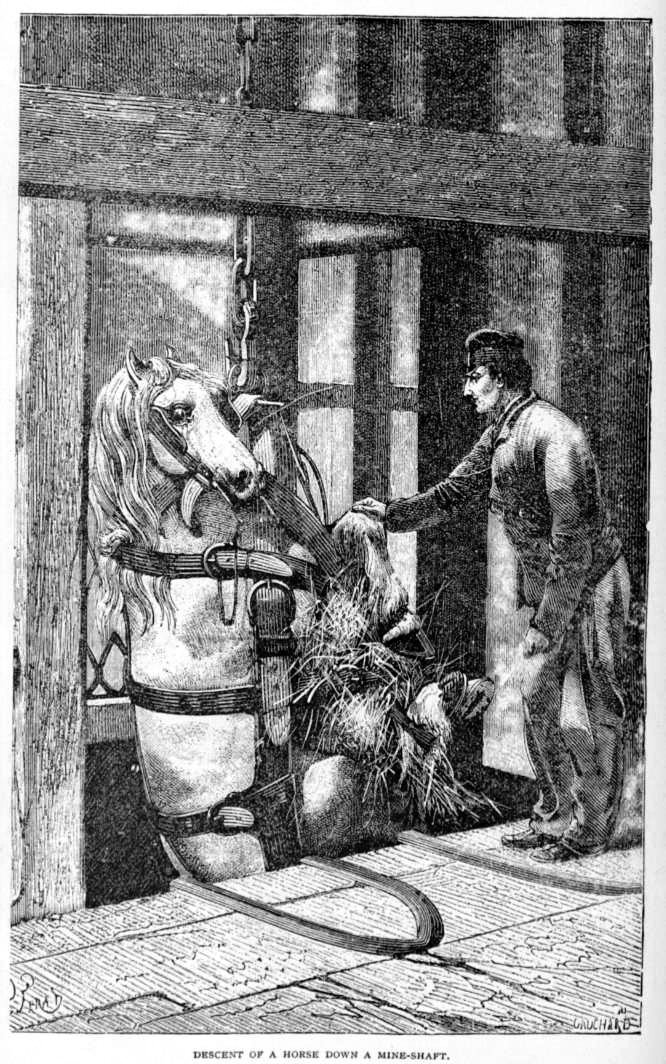
My favourite part is Etienne's first day down the mine when he finds work as a trammer and the best part of that scene for me is the description of Bataille, an old pit horse.
"He was Bataille, the oldest horse in the mine, a white horse who had spent ten years underground. For ten years he had lived in this hole, staying in the same corner of the stable, doing the same job, trotting up and down the dark haulage roads without ever going back up to see daylight. He was very fat, with a sleek coat and a benevolent air, and seemed to pass his time living the good life, protected from the misfortunes of the world above. Moreover, he had grown accustomed to the dark, and extremely clever. The passage he plied had finally become so familiar that he knew how to push open the ventilation doors with his head, and he remembered to stoop down to avoid bumping his head where the roof was too low. And he must have been able to count, for when he had done the regulation number of trips, he refused to start another, and insisted on being taken back to his manger. Now, with old age, his cat's eyes would sometimes cloud over with melancholy. Perhaps he had a vague vision, in the dim light of his dreams, of the mill where he was born, near Marchiennes, a mill set on the banks of the Scarpe, surrounded by broad meadows and swept by a constant breeze. There was something bright and burning in the air, a sort of huge lamp, but the creature could not recall it exactly. And he lowered his head, trembling on his aged legs in his futile attempts to remember what the sun was like."
We are introduced to Bataille as another horse is being lowered into the mine to begin his working life underground. Trompette, the new arrival, is scared stiff after his journey down the mine shaft and remains frozen in place. Bataille, who has just finished his shift, approaches to greet him, "And he suddenly let out a resounding whinny, whose happy music seemed muted with a sorrowful sigh. It was a welcoming shout, and a cry of pleasure at the arrival of a sudden whiff of the past, but also a sigh of pity for the latest prisoner, who would never be sent back alive."
Picture from Wikipedia entry on pit pony

I hope to finish reading Germinal this weekend but I suspect that it will not have a happy or pleasant ending.

Sunday, 7 April 2013

Short Story Sunday - Honore de Balzac

Honore de Balzac - In the Desert


I am taking part in Zoladdiction this month and I have decided to make April the month of all things French. So, for this week's short story I read a marvellous tale by Honore de Balzac (another French classic writer that I had not previously read).

In the Desert or A Passion in the Desert as I also saw it translated, is a tale about a Provencal soldier in North Africa during Napoleon's French campaign in Egypt and Syria (1798 - 1801). The soldier is captured by North African soldiers and marched through the desert by his captors. One night, he manages to escape, but he is so desperate to get as far away as possible from the enemy that he pushes the horse he has stolen to exhaustion. The stolen horse collapses and dies and the soldier is left alone in the desert. After wandering for a while, lost in the sands, he comes across a small oasis with: water, date palms and a small cave for shelter. For a short while the soldier is somewhat relieved as he has been rescued from certain death from thirst and exposure, but soon he begins to almost go mad from the solitary situation in which he finds himself.

The soldier tries to make the best of the situation and attempts to improve his shelter by using palm leaves as a mat for sleeping; however, in the night he wakes up and realises that a large animal is in the cave with him. As dawn arrives the soldier sees that his fellow cave dweller is a fully grown, female panther.

The rest of the story details the relationship between the panther and the soldier and how slowly they begin to trust each other and eventually end up loving one another. Their "love story" ends through a misunderstanding: the panther suddenly bites the soldier's leg (probably rather gently as she does him no harm) and the soldier reacts instinctively plunging his dagger in her throat and killing her.

The soldier is rescued shortly after the panther's death and returns to France.


Saturday, 6 April 2013

The Library User is King

I recently borrowed a book from the library which I had to request from the stacks. The book (Charles Lamb: Miscellaneous Essays), which was last borrowed decades ago, had a rather frightening label pasted in the front cover detailing the rules of library book borrowing.


How things have changed! Today I can borrow ten books (in other cities I have borrowed as many as 15 books at a time), no one tells me what genre of book I may, or may not check out and most libraries I use have self-service check out/in machines so, if I desired, I could borrow ten racy romances without anyone batting an eyelid.

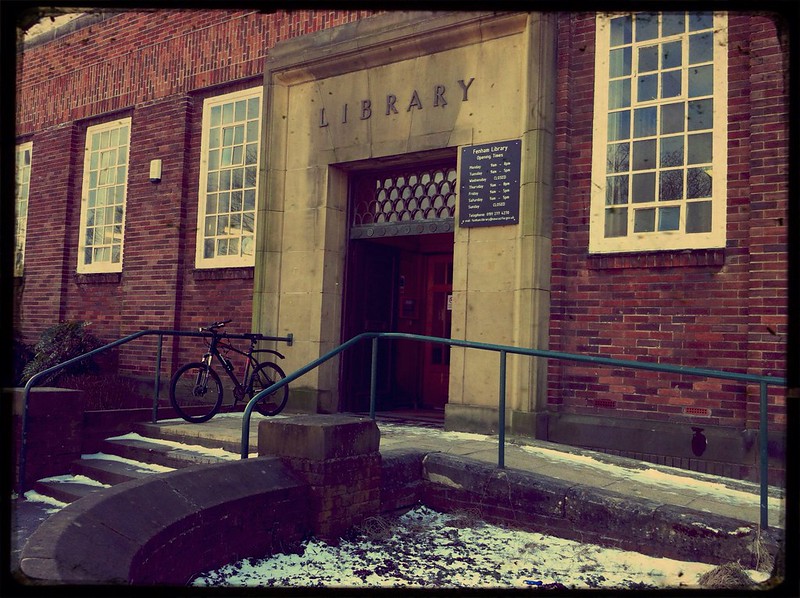
Fenham Library


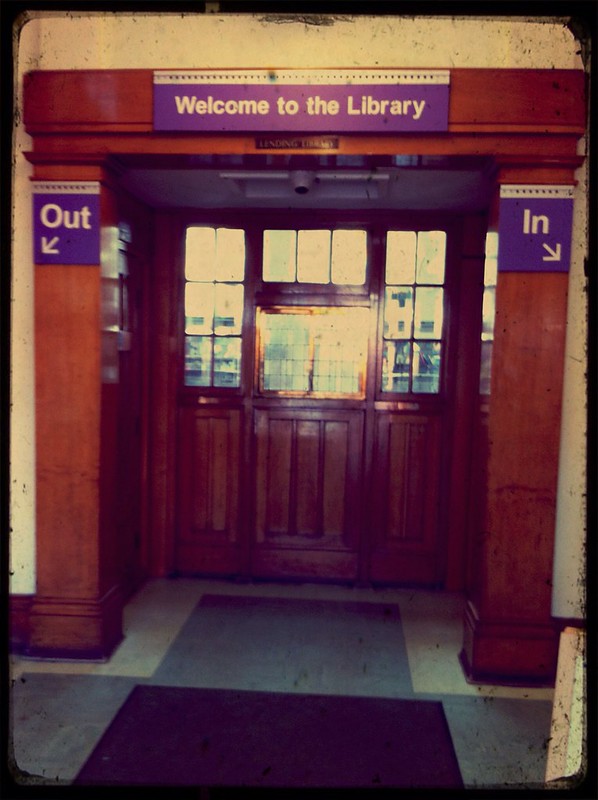
Fenham Library is a Grade II listed building that was built in 1938. Although it has been modernised, it was nice to still see some original features including the separate In and Out doors.


The library is made up of a large central room with the lending stock and enquiry desk, a separate children's library to the right of the entrance and a separate study area with PCs and plenty of study tables.


The library is earmarked for closure by Newcastle City Council.